
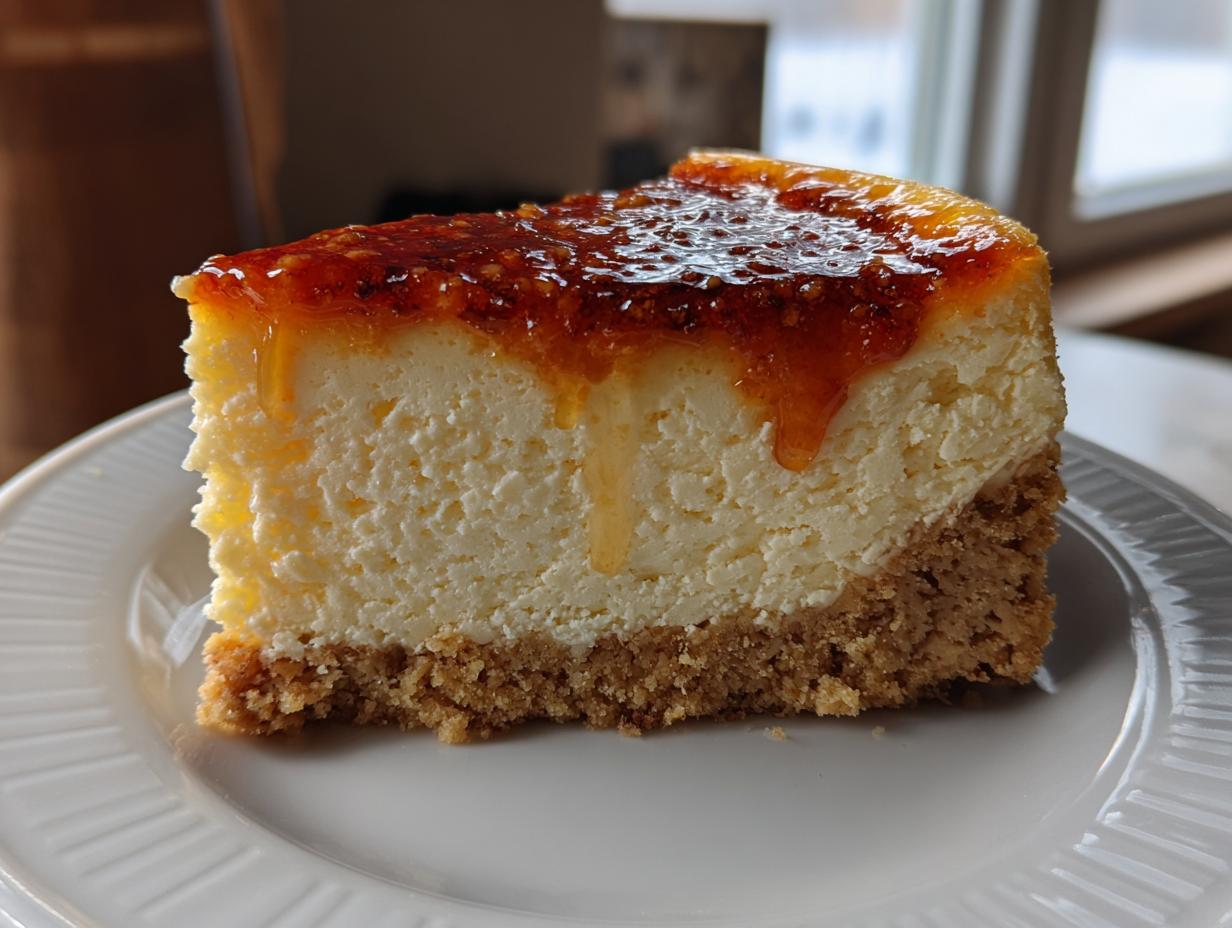

If you’ve ever stared at two incredible desserts—a velvety baked cheesecake and a perfect, crackling crème brûlée—and couldn’t choose, then you’re exactly where I was! I live to create those elegant baking experiences that still feel totally achievable at home. That’s why I’m so thrilled to share this ultimate fusion: the crème brûlée cheesecake. It takes the creamy richness you crave and tops it with that irresistible, shattered layer of caramelized sugar. Trust me, this dessert mashup is the showstopper you’ve been looking for, proving that gourmet desserts don’t have to be fussy or intimidating.
- Why This Creme Brulee Cheesecake Is Your Next Showstopper Dessert
- Gathering Ingredients for the Ultimate Creme Brulee Cheesecake
- Step-by-Step Instructions for a Perfect Creme Brulee Cheesecake
- Tips for Success When Making Creme Brulee Cheesecake
- Storing and Serving Your Incredible Creme Brulee Cheesecake
- Pairing Suggestions for This Decadent Dessert
- Frequently Asked Questions About Creme Brulee Cheesecake
- Understanding the Fusion: Cheesecake Recipes vs. Creme Brulee Dessert
- Final Thoughts on Creating Your Gourmet Cheesecake
Why This Creme Brulee Cheesecake Is Your Next Showstopper Dessert
I promise you, this isn’t just another dessert; it’s an experience! We’re marrying two legendary classics here. The contrast between the cold, creamy rich dessert underneath and the warm, glassy top is just magic. Plus, I’ve figured out a trick so you don’t have to mess with fussy water baths. It’s designed to be the ultimate showstopper dessert!
- The perfect textural marriage: Silky cheesecake meets crisp, shattered caramel.
- No water bath required—simplifying the baking process tremendously!
- Stunningly elegant presentation for any dinner party.
Achieving Perfect Texture in Your Creme Brulee Cheesecake
The secret really lies in the setup. Make sure your cream cheese is super soft—I leave mine out for at least two hours. When you mix the filling, don’t overbeat once those eggs go in! We want creamy, not airy. Too much air in the batter is what causes sinking and cracks later on, and nobody wants that drama with their beautiful cake.
Gathering Ingredients for the Ultimate Creme Brulee Cheesecake
Okay, let’s talk about what makes this dessert really sing. Since we are combining two heavy hitters here, we need quality components! Don’t worry, the list isn’t scary, but attention to detail matters immensely, especially with the cream cheese and that beautiful custard top. Getting this creme brulee cheesecake right means checking off a few boxes before you even turn on the oven. Grab your favorite mixing bowls; here’s what you’ll need to gather up for the crust, the rich filling, and that gorgeous final layer.
- For the Crust:
- 1 1/2 cups graham cracker crumbs
- 1/3 cup granulated sugar
- 6 tbsp unsalted butter, melted
- For the Cheesecake Filling:
- 16 oz cream cheese, softened
- 3/4 cup granulated sugar
- 3 large eggs
- 1 tsp vanilla extract
- 2 tbsp sour cream
- For the Custard Topping:
- 1 cup heavy cream
- 1/2 cup granulated sugar
Ingredient Notes and Substitutions for Your Creme Brulee Cheesecake
A few quick notes from my kitchen to yours! For the best, dreamiest texture, please do not skimp on the cream cheese—use the full-fat blocks, not the whipped tubs; that makes a huge difference in richness. Vanilla is key here since it’s playing the background star, so if you have vanilla bean paste, use that! It gives those beautiful little flecks of flavor that make it feel so gourmet. Lastly, the heavy cream for the topping *must* be cold when you start heating it. That helps it warm evenly before we set it later. These little steps are how we guarantee an indulgent sweet treat that impresses every time.
Step-by-Step Instructions for a Perfect Creme Brulee Cheesecake
Alright, deep breaths! This is where the magic happens, and I promise, sticking to the order truly makes this creme brulee cheesecake come out spectacularly creamy. First things first: preheat that oven to 325°F (160°C) and get your 9-inch springform pan ready with parchment on the bottom. Start by making your crumb crust—you just combine the crumbs, sugar, and butter, press it down firmly in the pan, and give it a quick 10-minute bake; let it cool a bit after that.
Now for the filling, and this is where we keep things smooth! Beat that softened cream cheese until it’s totally velvety—no lumps allowed! Then, add the sugar slowly. When you incorporate the eggs, you add them one at a time, mixing just until they disappear after each addition. Seriously, don’t overmix here; that’s how we avoid those nasty cracks! Fold in the vanilla and sour cream until it’s just combined. Pour this beautiful batter over your cooled crust.
Bake for about 50 to 60 minutes. You want the edges set, but the very center needs that tell-tale *slight* wobble. The secret to my stress-free baking method is what happens next: turn the oven OFF, crack the door open a smidge—just enough for steam to escape—and let it cool inside for a full hour. This gentle cooling is my favorite inherited trick! After that hour, you can take it out to finish cooling on the counter before it chills for a long, long time—at least six hours, but overnight is heaven!

Mastering the Caramelized Sugar Topping on Your Creme Brulee Cheesecake
This part has to wait until just before serving, so save the excitement! Once the entire cheesecake is cold, heat up your heavy cream until it’s steaming hot, then whisk in the remaining sugar until it’s dissolved completely. Let that custard cool down just a touch before carefully pouring it over the chilled cheesecake surface. Pop it back in the fridge for about 30 minutes to let that lovely layer firm up slightly. Then, it’s time for the fun part: the blow torch! Keep that kitchen torch moving constantly over the sugar in little circles. You want an even, amber-colored crust forming. If the flame stays still for even a second, you’ll get a burnt spot, and we want gorgeous caramel. If you don’t have a torch, you can hover the cheesecake under a super hot broiler, but you HAVE to watch it like a hawk—it goes from perfect to scorched in literally ten seconds!

Tips for Success When Making Creme Brulee Cheesecake
I know that making a showstopper dessert like the creme brulee cheesecake can feel intimidating, but honestly, it’s all about managing expectations and timing. You want that smooth, restaurant-quality finish, and I’ve picked up a few tricks over the years that make the process so much less stressful. The biggest thing? Patience! If you rush any of these steps, you risk compromising that incredible texture we worked so hard to create.
Here are my non-negotiable tips for getting that perfect result every single time:
- Room Temperature Cream Cheese is Law: I cannot stress this enough when making any baked cheesecake recipe, including this one. If your cream cheese is even slightly cool, you will end up with lumps, no matter how great your mixer is. Let it sit out until it’s truly pliable before you start beating it.
- Embrace the Long Chill: You might be tempted to torch that beautiful top just two hours after it comes out of the fridge, but don’t! The custard topping needs time to set up firmly against the baked cheesecake layer. If it’s not thoroughly chilled—seriously, I aim for 8 hours or overnight—the warm custard will just melt right into the cheesecake when you apply the heat.
- The Cream Cheese Temperature Rule: This applies to both the filling and the topping custard. The topping mixture must be added when the cheesecake is *ice cold*. Think of it as temperature shock treatment! The cold base helps the warm custard set quickly when we return it to the fridge for that final chill before torching.
- Don’t Over Bake! Remember that wobble in the center when you take it out? That’s your insurance policy against cracks. The residual heat, especially when using my oven-cooling trick, finishes the cooking process gently. Pulling it out too late, even by five minutes, ruins that lovely creamy rich dessert interior we want in our creme brulee cheesecake.
Storing and Serving Your Incredible Creme Brulee Cheesecake
Getting this incredible creme brulee cheesecake right means planning ahead, especially when it comes to chilling! If you are making this ahead of time for a party—which I highly recommend, because who needs stress on party day?—you must store the cheesecake *before* you torch the sugar topping. Keep the fully chilled cake, without the topping, tightly wrapped in plastic wrap in the refrigerator. It keeps beautifully for up to four days this way! You want to keep the topping separate until the very last minute, believe me.
When it comes to that stunning caramelized sugar, the goal is contrast, right? You want that sugary shell warm and crispy against the ice-cold cheesecake base. So, right before your guests arrive, prepare the custard topping, pour it on, chill it for that 30 minutes until it’s firm, and *then* grab your torch! It’s the best way to serve it.

What happens if I have leftovers after torching?
If you somehow end up with leftovers (I doubt it, but let’s be optimistic!), you can absolutely enjoy the rest of your creme brulee cheesecake the next day. Just know that the beautiful, perfect crunch of that torched sugar topping won’t last forever once it hits the fridge air. It tends to soften up overnight, which isn’t terrible, but it loses that *snap*.
If you do need to store leftovers that are already torched, wrap the remaining slices carefully in plastic wrap or place them in an airtight container. Eat them within a day or two. If you know you’ll have leftovers, sometimes it’s easier to torch only half the cake right before serving, keeping the other half frozen or chilled, ready for you to torch when you want a second helping later in the week!
Tips for a Perfect Serving Temperature
To truly elevate this dessert, aim for that temperature contrast. The cheesecake layer should be refrigerator-cold, almost firm. When you torch that top layer, the sugar caramelizes quickly and holds some residual warmth. Serving it immediately after torching gives you that glorious experience: the satisfying *crack* of warm sugar giving way to cold, dense creaminess.
If you torch it too far in advance, the warm sugar layer starts to melt into the cold custard layer below, making the top layer a little soggy—we want that shattering experience! Remember, this indulgent sweet treat is best enjoyed the moment that amazing hardened crust is perfected.
Pairing Suggestions for This Decadent Dessert
We’ve made something truly beautiful here, haven’t we? When you create a dessert this rich and elegant, you absolutely need the perfect glass of something alongside it to cut through the creaminess and truly make the vanilla and caramel notes shine. This is where my background in entertaining comes in handy!
If you are serving this after dinner, you want a wine that complements the sweetness without being cloying. I always steer people toward something slightly sweet but with good acidity. A classic pairing for anything with a caramelized sugar top is a beautiful Sauternes. That honeyed richness just sings alongside the toasted notes in the crust and topping. If Sauternes isn’t available, a good German Riesling that has a bit of residual sugar works wonders too. It cleanses the palate beautifully between bites.
But hey, not everyone drinks wine, and that’s totally fair! For a lovely non-alcoholic option, keep it simple and clean. I love serving a strong-brewed, slightly sweetened black tea, maybe something like an Earl Grey. The light citrusy notes in the bergamot complement the creaminess of the cheesecake without competing with the vanilla. You could also do a sparkling cider; the bubbles give you that refreshing lift that balances out any heavy, decadent desserts!
Serving Suggestions for Maximum Impact
Presentation is everything for a showstopper! Because this dessert is so rich, you don’t need huge slices. Think elegant slivers. I always dust the serving plate ever so lightly with a tiny bit of cocoa powder or place a single fresh raspberry or a sprig of mint right next to the slice. It adds a pop of color and makes the whole plate look like it came straight from a fancy catering menu, even though you made it right here at home!
Serving Temperature Contrast
Remember what we talked about with the torching? You want that incredible temperature contrast. Cut the chilled slices, then torch the topping right before you serve that plate. The moment that warm, glassy caramel hits the cold, creamy center, it’s textural heaven. Don’t let the torched slices sit out for too long, or you lose that amazing difference between the layers.

Frequently Asked Questions About Creme Brulee Cheesecake
It’s normal for folks to have a few questions when dealing with a beautiful dessert mashup like this! The techniques for cheesecake and crème brûlée approach things a little differently, so combining them means keeping a few things in mind. Don’t stress if you’re wondering about making parts ahead of time—I’ve got the answers to help you master this creme brulee cheesecake.
Can I make the cheesecake part ahead of time?
Yes, absolutely! In fact, I highly recommend it. A standard cheesecake recipe needs a long chill to set properly, and this one is no exception. You should bake it, cool it completely, and then chill it for at least 6 hours, but overnight is truly best. Just make sure it’s wrapped well and *don’t* torch the sugar topping until you are ready to serve. The beauty of this dessert is the fresh crackle!
Why did my caramelized sugar topping get soggy or soft?
This is usually a result of timing or moisture migration. If you torch the sugar too early, the heat transfers down, and the custard layer underneath starts to weep moisture, softening your beautiful crust. Also, if you wrap the torched cake tightly immediately, condensation can soften it up quickly. For the best experience, only torch what you plan to eat in the next hour or so. If you torch the whole thing and store it, that crispness will definitely turn chewy!
Can I use something other than a graham cracker crust?
You certainly can! Graham cracker crumbs work wonderfully because they are sturdy and provide a lovely honeyed base that highlights the vanilla. However, if you want a different flavor profile for your gourmet cheesecake, try digestive biscuits—they have a slightly richer, whole-grain flavor that also works beautifully. Some people even use vanilla wafer crumbs for a sweeter base! Just ensure you pack your chosen crumb mixture firmly and give it that initial bake step.
Is using a kitchen torch the only way to get that perfect caramelized sugar topping?
Honestly, the torch is the easiest and best tool for the job because it allows you to target the heat just on the sugar, leaving the cold cheesecake underneath untouched. But, if you do not own one of these handy kitchen torch desserts tools, you can use your broiler, as I mentioned briefly! Pop the cheesecake (with the layer of sugar on top, sitting on the lowest rack) under a preheated broiler. You must stay right there and watch it—it might only take 90 seconds to two minutes. Move it around if your broiler has hot spots. It’s risky business, but it works in a pinch for that glorious caramelized sugar topping!
My cheesecake cracked a little on top. Is it ruined?
Oh honey, no! First off, remember that this creme brulee cheesecake is getting a thick custard layer poured over the top anyway, so any tiny cracks in the actual cheesecake base will be completely hidden! But for future reference, cracks usually happen from aggressive mixing (too much air) or too fast cooling. Make sure you use softened, not melted, cream cheese, and definitely utilize my trick of letting it cool slowly inside the turned-off oven. Even if it cracks, that creamy texture underneath is still perfect!
Understanding the Fusion: Cheesecake Recipes vs. Creme Brulee Dessert
It’s neat to pause for a second and think about what we’ve actually done here! People often search for standard cheesecake recipes, expecting that dense, slightly tangy base we love. But that’s only half the story for this dish.
A classic creme brulee dessert relies on a thin, delicate custard that is gently baked until just set, usually relying on steam for that perfect texture. When you compare that to a baked cheesecake, the cheesecake has much higher fat content and is structurally sturdier because of the eggs and the sheer volume of cream cheese.
This beautiful dessert mashup takes the best of both worlds. We start with the robust, creamy backbone of the cheesecake—the part that holds its shape beautifully when sliced. Then, we layer that smooth, sweet custard on top. That custard layer is actually richer and thicker than traditional crème brûlée because it needs to hold up to the serious power of the kitchen torch!
That top layer is what separates this from just a plain baked cheesecake with sugar sprinkled on top. It creates two unbelievably satisfying textures happening at once. You get the density and slight tang from the cheesecake, followed immediately by that sweet, silky custard, all shattered by that crisp, amber crust. It’s an architectural feat for a home baker, but honestly, the technique is super straightforward once you know the structure!
Final Thoughts on Creating Your Gourmet Cheesecake
I really hope you feel inspired to try this amazing creation! Seeing that thick, golden caramel crust shatter under your spoon is honestly one of the best moments in baking. It’s a true testament to approachable elegance—something that looks like it belongs in a high-end shop but comes together right there in your kitchen.
This creme brulee cheesecake might just become your go-to for special occasions, or just because you deserve an indulgent sweet treat on a random Tuesday! I put everything I know about reliability and flavor into these steps so you can bake with confidence.
Now, I’d love to hear what you think! Did you use a torch or the broiler? Did your family obsess over the crackle? Please leave a comment below and let me know how it turned out, or feel free to reach out through my contact page if you have any specific questions. Happy baking!
PrintShowstopper Crème Brûlée Cheesecake

This recipe combines a rich, creamy baked cheesecake with the signature crackly, caramelized sugar topping of classic crème brûlée. It is an elegant dessert designed for home cooks.
- Prep Time: 30 min
- Cook Time: 60 min
- Total Time: 7 hours 30 min
- Yield: 10 servings 1x
- Category: Dessert
- Method: Baking
- Cuisine: American
- Diet: Vegetarian
Ingredients
- 1 1/2 cups graham cracker crumbs
- 1/3 cup granulated sugar (for crust)
- 6 tbsp unsalted butter, melted
- 16 oz cream cheese, softened
- 3/4 cup granulated sugar (for filling)
- 3 large eggs
- 1 tsp vanilla extract
- 2 tbsp sour cream
- 1 cup heavy cream (for topping layer)
- 1/2 cup granulated sugar (for topping)
Instructions
- Preheat your oven to 325°F (160°C). Prepare a 9-inch springform pan by lining the bottom with parchment paper.
- Make the crust: Combine graham cracker crumbs, 1/3 cup sugar, and melted butter. Press the mixture firmly into the bottom of the prepared pan. Bake for 10 minutes. Let cool slightly.
- Make the cheesecake filling: Beat the softened cream cheese until smooth. Gradually add 3/4 cup sugar, mixing until combined. Beat in the eggs one at a time, mixing just until incorporated after each addition. Mix in the vanilla extract and sour cream until the batter is smooth.
- Pour the cheesecake filling over the cooled crust.
- Bake the cheesecake for 50 to 60 minutes, or until the edges are set but the center still has a slight wobble. Avoid using a water bath for this recipe to simplify the process.
- Turn off the oven, crack the door open slightly, and let the cheesecake cool inside the oven for 1 hour. This prevents cracking.
- Remove the cheesecake from the oven and let it cool completely on a wire rack. Chill in the refrigerator for at least 6 hours, or preferably overnight.
- Prepare the topping: When ready to serve, pour the cold heavy cream into a saucepan and heat until steaming but not boiling. Remove from heat.
- In a separate bowl, whisk the remaining 1/2 cup sugar into the warm cream until dissolved. Let this custard mixture cool slightly.
- Gently pour the custard mixture evenly over the chilled cheesecake surface. Return the cheesecake to the refrigerator for 30 minutes to allow the custard layer to firm up slightly.
- Use a kitchen torch to evenly caramelize the sugar topping until it forms a hard, amber crust. Serve immediately to enjoy the contrast between the warm topping and the cold cheesecake.
Notes
- For the best results when torching, use a thin, even layer of sugar and keep the flame moving constantly to prevent burning.
- If you do not have a kitchen torch, you can place the cheesecake under a hot broiler for 1-2 minutes, watching constantly to prevent burning.
- This dessert pairs well with a crisp white wine, similar to how you might approach meal planning for an elegant dinner.
Nutrition
- Serving Size: 1 slice
- Calories: 450
- Sugar: 35g
- Sodium: 250mg
- Fat: 30g
- Saturated Fat: 18g
- Unsaturated Fat: 12g
- Trans Fat: 0.5g
- Carbohydrates: 40g
- Fiber: 1g
- Protein: 8g
- Cholesterol: 120mg