

When the holidays arrive, we all want that show-stopping moment—the centerpiece that guests immediately gravitate toward. Making a spectacular, tender roast shouldn’t feel like a high-stakes gamble, though. That’s why I’m sharing what I call my Foolproof Oven-Roasted Herb Garlic Prime Rib Roast (Standing Rib Roast). This method for cooking a magnificent rib roast combines my culinary training with the practical approach I bring to my own kitchen, ensuring you get that gorgeous herb crust and juicy interior without any stress. Trust me, this recipe is designed to deliver steakhouse quality right at home for your most memorable meals. To learn more about how I approach these elegant but simple dishes, please read my story on the About page.
- Why This Oven Roasted Rib Roast Recipe Guarantees Success
- Ingredients for Your Impressive Rib Roast
- Essential Equipment for Cooking Your Rib Roast
- Step-by-Step Instructions: How to Cook Rib Roast Perfectly
- Determining the Perfect Temperature for Rib Roast Doneness
- Serving Suggestions for Your Holiday Roast Ideas
- Storage and Reheating Your Leftover Rib Roast
- Frequently Asked Questions About Making a Rib Roast
- A Note on Nutrition for This Beef Roast
- Share Your Story: Creating Memories with This Rib Roast
Why This Oven Roasted Rib Roast Recipe Guarantees Success
When you are investing in a beautiful cut of meat like this, you need a recipe you can really trust. That’s the spirit behind this rib roast method!
- Reliable results, even if you’re cooking it for the first time.
- A gorgeous, deeply flavored herb crust that screams “special occasion.”
- The elimination of guesswork, thanks to detailed temperature guidance.
- It brings that steakhouse-style elegance without needing a smokehouse! Check out more beautiful main dishes here.
Achieving the Perfect Juicy Tender Roast Every Time
The real secret here isn’t just in the garlic and herbs; it’s the temperature control. We start high to build structure and color on the outside—that beautiful sear—and then we bring the heat way down. This technique lets the meat cook gently and evenly, ensuring the juices stay locked inside. It’s a truly hands-off method once it’s in the oven, which gives you time to focus on the sides!
Ingredients for Your Impressive Rib Roast
To create this showstopper, you need quality starting materials. Remember, when you have a cut as wonderful as a rib roast, you don’t actually need to do much to it! Source the best cut you can find; often, the difference between a good roast and a great one comes down to the marbling. I aim for at least two ribs for a good presentation, but adjust based on your crowd size. Don’t forget all the necessary items listed below—the salt and the herbs are what create that fantastic outer shell.
- 1 bone-in rib roast (about 4-6 lbs, 2-3 ribs)
- 3 tablespoons kosher salt
- 2 tablespoons black pepper
- 1 tablespoon dried thyme
- 1 tablespoon dried rosemary
- 6 cloves garlic, minced
- 1/4 cup olive oil
- 1 tablespoon Dijon mustard
- 1 teaspoon onion powder
Ingredient Notes and Substitutions for Your Rib Roast
Concerning bones, I genuinely prefer the bone-in roast; those bones act like little insulation blankets, helping the meat cook slightly more evenly and keeping the bottom of your rib roast from drying out. If you can only find a boneless cut, that’s absolutely fine! Just be sure to tie it tightly with twine so it holds its shape. If you happen to have fresh rosemary and thyme on hand, use those instead of dried! You’ll need about three times the amount of fresh herbs you see listed here. This robust rub needs to coat every inch of that beef.
Essential Equipment for Cooking Your Rib Roast
You absolutely cannot attempt a big roast like this without the right tools. I’ve learned the hard way that trying to ‘make do’ with the wrong equipment only leads to stress, and that’s what we are trying to avoid here for an impressive dinner. Think of these items as small investments in guaranteed success when you are working with a beautiful, expensive piece of beef.
First, you must have a sturdy roasting pan, and crucially, it needs a rack that fits inside it. The rack lifts the meat off the bottom of the pan. This lift allows air to circulate around the entire roast and keeps the bottom from actually stewing in the rendered fat. If you don’t lift it, you end up steaming the underside instead of roasting it!
But here’s my most serious point, and this is where I lean on my formal training: you need a reliable, instant-read meat thermometer. Forget those old dial ones that take forever to register; they just aren’t accurate enough when we are talking about hitting that Perfect Temperature for Rib Roast. You must check the temperature deep into the thickest part of the meat, avoiding the bone.
Trust me on this—a good thermometer is the difference between a perfect medium-rare and a disappointing well-done roast. I keep mine right next to my seasonings!
Step-by-Step Instructions: How to Cook Rib Roast Perfectly
Now we arrive at the main event! Cooking this rib roast is truly where the magic happens, and honestly, it’s much simpler than you might think. The most important thing you can do before anything touches the oven is letting that beautiful beef sit out. We need it to come to room temperature—that means removing it from the fridge about two to three hours before you plan to roast it. This helps prevent shock in the oven, which leads to uneven cooking.
The aroma alone when this is cooking is enough to make neighbors knock on your door! Once you get it seasoned, the house just smells like the best holiday feast. For more methods on achieving perfect results, you can find excellent guidance from others who love making an impressive roast, like this foolproof prime rib guide. For more inspiration from my kitchen, feel free to browse the Unfold Recipes Blog for all my latest projects.
Preparing the Herb Garlic Rub Prime Rib Roast
While that gorgeous roast is getting friendly with room temperature, mix up your rub. Combine that minced garlic, olive oil, Dijon, and all those lovely herbs and seasonings. When you get to the roast itself, grab some paper towels and really, really pat the entire surface dry. I mean bone-dry! This is critical for developing a crust later on, so don’t skip this step. Then, use your fingers to massage that rich herb mixture into every crease of your prime rib roast. Place it on the rack in the pan, fat-side up. You are ready for the heat!
The Two-Temperature Method for Oven Roasted Rib Roast
This is the technique that makes all the difference. We start your oven hot—a blazing 500 degrees Fahrenheit—and roast for just 15 minutes. This intense blast creates that incredible outer crust we are looking for. Then, listen closely: without opening that oven door, drop the temperature down to 325 degrees Fahrenheit. Seriously, avoid opening the door! Every time you peek, you lose precious heat and interrupt the gentle cooking phase. Keep it closed until you are ready for your first temperature check using that reliable thermometer. This two-step temperature dance ensures you get that signature oven roasted rib roast texture.
We let it rest for at least 20 minutes after it comes out. I know it’s hard to wait, but trust me, that rest time is non-negotiable for a beautifully juicy result!
Determining the Perfect Temperature for Rib Roast Doneness
Honestly, the thermometer is your best friend when making a rib roast. Forget guessing based on time alone—every oven and every cut of beef is slightly different, so relying on what the temperature probe tells you is the only way to guarantee that juicy tender roast you’re hoping for. We pull the roast out of the oven *before* it hits the target temperature because carry-over cooking is real, and we need that juice to settle back in!

- For Rare: Pull the roast when the thermometer reads 120–125°F.
- For Medium-Rare (My favorite for this cut!): Pull it when it hits 130–135°F.
- For Medium: That’s usually right around 140–145°F when you remove it.
Use this guide as your roadmap for the absolute perfect temperature for rib roast success. If you want to explore more traditional methods for a standing rib roast, I found some great tips for cooking them low and slow over here.
Crucial Resting Time for Your Standing Rib Roast
Once that beautiful meat is out of the heat, you absolutely must tent it loosely with foil and let it rest for at least 20 minutes. This is not optional; this is science! If you carve it immediately, all those beautiful juices that have risen toward the exterior of the roast will pour out onto your cutting board, leaving you with dry meat. When you let it rest, the muscle fibers relax and reabsorb that moisture. You can expect the internal temperature to climb another 5 to 10 degrees while it rests, so factor that into your pull temperature!
Serving Suggestions for Your Holiday Roast Ideas
Once your magnificent standing rib roast has rested and you’ve carved those perfect, rosy slices—what do we serve alongside it? This is where we balance the richness of the beef with something vibrant and elegant. Remember, this is the star of the show, so the supporting cast should be stellar but shouldn’t fight for attention!

My absolute favorite way to accompany a heavy roast like this is with rich, creamy mashed potatoes—maybe spiked with a touch of horseradish if you want a little kick. If you’re looking for something green, simple roasted asparagus tossed with high-quality olive oil and a squeeze of fresh lemon juice works beautifully. It provides that necessary bright acidity to cut through the richness of the beef.
And we simply must talk about the drippings! Don’t let those flavorful bits languish in the roasting pan. Making a quick pan gravy is non-negotiable for me. It’s so simple, really! Just scoop those drippings into a saucepan, skim off most of the fat, whisk in a couple of tablespoons of flour, and slowly incorporate beef broth until it’s thick and glossy. It’s such an easy step that makes your entire meal feel restaurant-quality. You can find some wonderful inspiration for pairings on my Side Dishes page.

If you want to see how other cooks are serving their roasts, I saw a gorgeous one recently that featured a quick pan gravy just like ours; you can check out that idea here. A truly impressive dinner is all in the details!
Storage and Reheating Your Leftover Rib Roast
Part of the joy of cooking a huge rib roast is having leftovers, but only if you treat them right! The key to keeping that beef tasting spectacular tomorrow is slicing it thinly against the grain right away. If you leave it as one big chunk, it dries out much faster when you reheat it.
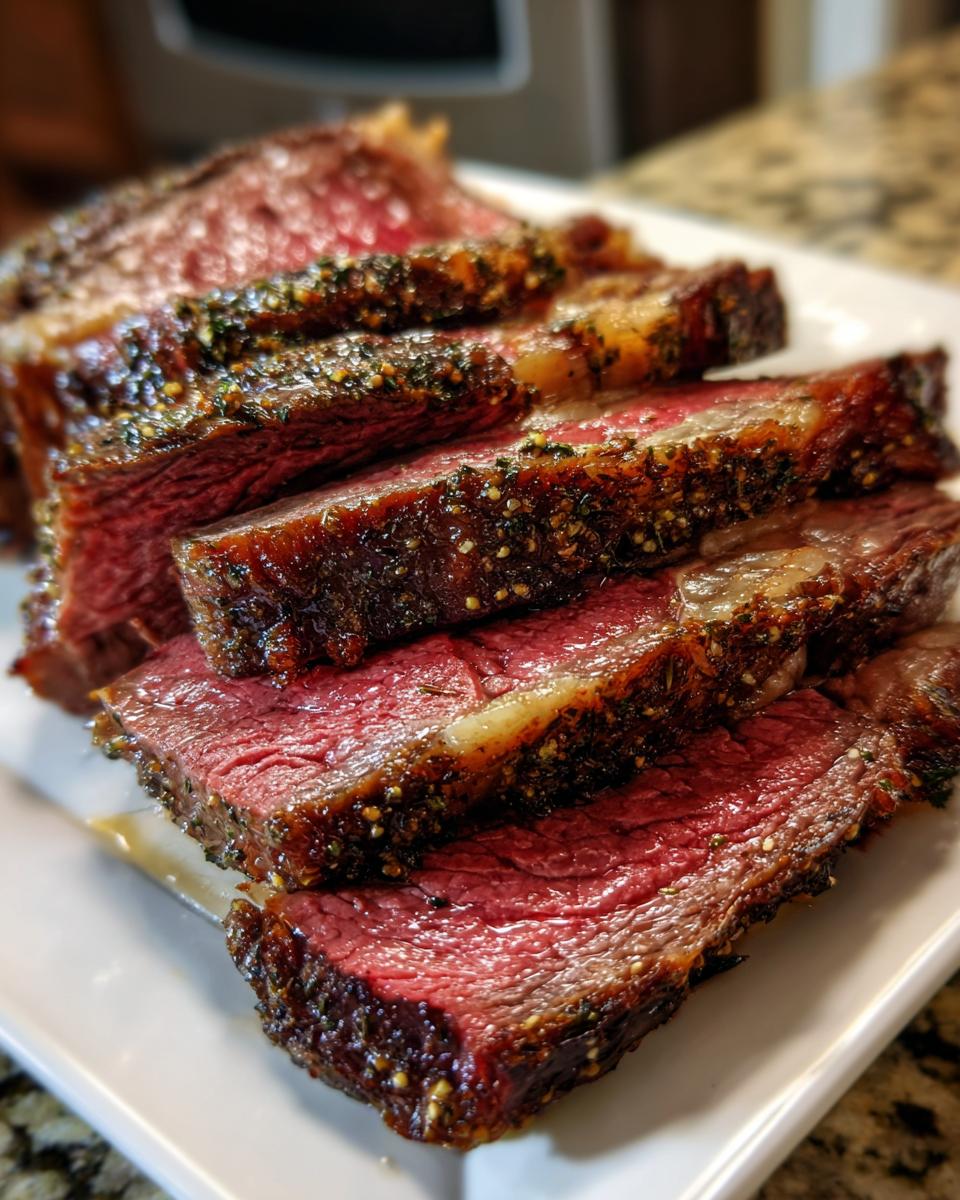
Store the thin slices in an airtight container in the fridge for up to three or four days—no longer than that! When you want to enjoy it again, don’t toss it in the microwave alone. Instead, gently warm the slices in a skillet with a little bit of beef broth or that amazing pan gravy we made. This keeps your leftover roast incredibly moist. It’s almost as good as the first night!
Frequently Asked Questions About Making a Rib Roast
It’s completely normal to have questions when tackling a showstopper like a rib roast for the first time! These large cuts can seem intimidating, but trust me, once you nail the temperature, it’s all smooth sailing. Here are a few things readers often ask me when they are planning their holiday meal.
Can I use a boneless cut instead of bone-in for this recipe?
Yes, you absolutely can make a wonderful roast with a boneless cut! Just remember that the bones offer some protection, so a boneless ribeye roast recipe might cook just a little faster. If you go boneless, tie it up tightly with twine so it keeps a nice, even cylindrical shape. This is key for getting that even cooking we discussed earlier. Aim for the same final temperature regardless of the cut!
What happens if I don’t have a dedicated roasting rack?
Oh, I totally get it—not every kitchen has a perfectly sized rack! If you’re missing one, don’t stress. The goal is to lift the meat off the bottom pan so the bottom doesn’t steam. You can create a makeshift rack by laying two wooden spoons (the sturdy, thicker kind!) parallel to each other in your roasting pan, or even criss-crossing two sturdy metal cooling racks inside if they fit. Just make sure whatever you use can handle the heat of the oven. This is crucial for achieving that oven roasted rib roast crust on all sides.
Is it possible to slow roast beef instead of using the 500-degree method?
While this recipe calls for the high-heat sear followed by a moderate roast, many folks love the entirely low-and-slow approach for a truly gentle cook. Slow roasting beef is a fantastic technique for a super juicy tender roast, especially if you have a very large cut. If you choose that route, simply roast the entire time at 250°F or 275°F until you hit your target temperature, skipping the initial 500-degree blast. Both methods yield spectacular results for your Christmas Dinner Centerpiece, it’s really just personal preference!
Can I prep the herb rub ahead of time?
You certainly can! Preparing the garlic rub ahead of time is actually one of my favorite ways to streamline entertaining. Mix up everything except the olive oil and mustard. Store the dry spices mixed together in a tiny airtight container in the pantry. When you take your Prime Rib Roast Recipe meat out to temper, mix in the oil and mustard and apply just before roasting. It saves so much time on a busy holiday morning!
If you’re planning brunch the next day, check out my brunch ideas for using up any smaller leftovers!
A Note on Nutrition for This Beef Roast
When we are preparing something as rich and celebratory as this beef roast, we often focus entirely on the flavor and the presentation, but I know many of you are also interested in the breakdown. While this is certainly a dish reserved for special occasions, I always want to be fully transparent about what we are serving. Please remember that these figures are just estimates based on the recipe breakdown and the standard serving size I recommend.
For a typical 4 oz cooked serving of this delicious meat, here is what you can generally expect:
- Calories: Approximately 350
- Fat: About 25 grams (with 10g saturated)
- Protein: A hearty 30 grams!
- Carbohydrates: 0 grams—it’s naturally gluten-free and carb-free since we aren’t adding sugary sauces.
Since this flavor comes almost entirely from high-quality beef and savory herbs, you get a great protein punch for your incredible holiday centerpiece. These numbers can shift based on how much fat you trim off before serving, or if you decide to drown every slice in a rich gravy—and who am I to judge? But knowing the base numbers helps when planning a rich meal like this. It’s honest food for a special day!
Share Your Story: Creating Memories with This Rib Roast
I truly hope making this foolproof rib roast brings as much joy to your table as it does to mine. If this recipe helped you create your most impressive holiday centerpiece yet, please leave a star rating below! I adore hearing how my kitchen secrets translate to your family celebrations. Feel free to share your success stories or ask any lingering questions over on my Contact Page. Happy cooking, everyone!
PrintFoolproof Oven-Roasted Herb Garlic Prime Rib Roast (Standing Rib Roast)

Create an impressive centerpiece for your special occasion with this reliable recipe for a juicy, tender prime rib roast featuring a savory herb and garlic crust.
- Prep Time: 20 min
- Cook Time: 2 hr 30 min
- Total Time: 3 hr 0 min
- Yield: 6 servings 1x
- Category: Holiday Dinner
- Method: Oven Roasting
- Cuisine: American
- Diet: Low Calorie
Ingredients
- 1 bone-in rib roast (about 4–6 lbs, 2–3 ribs)
- 3 tablespoons kosher salt
- 2 tablespoons black pepper
- 1 tablespoon dried thyme
- 1 tablespoon dried rosemary
- 6 cloves garlic, minced
- 1/4 cup olive oil
- 1 tablespoon Dijon mustard
- 1 teaspoon onion powder
Instructions
- Remove the roast from the refrigerator 2 to 3 hours before cooking to allow it to come to room temperature. Preheat your oven to 500 degrees Fahrenheit.
- Prepare the herb rub: In a small bowl, combine the minced garlic, olive oil, Dijon mustard, thyme, rosemary, salt, pepper, and onion powder. Mix well.
- Pat the entire surface of the rib roast dry with paper towels. Rub the herb mixture evenly over the entire roast.
- Place the roast, fat-side up, in a roasting pan fitted with a rack. If using a bone-in roast, ensure the bones are resting on the rack.
- Roast at 500 degrees Fahrenheit for 15 minutes. This high heat helps create a flavorful crust.
- Reduce the oven temperature to 325 degrees Fahrenheit. Continue roasting until the internal temperature reaches your desired doneness (see temperature guide below). Do not open the oven door during this phase.
- For rare: Remove at 120-125 degrees Fahrenheit. For medium-rare: Remove at 130-135 degrees Fahrenheit. For medium: Remove at 140-145 degrees Fahrenheit.
- Once the roast reaches the target temperature, immediately remove it from the oven. Tent it loosely with aluminum foil.
- Let the prime rib rest for at least 20 minutes before carving. The internal temperature will rise another 5 to 10 degrees during resting.
- Carve the standing rib roast into slices about 1/2 inch thick. Serve immediately with pan juices or your favorite gravy.
Notes
- For a bone-in roast, the bones act as insulation, leading to slightly longer cooking times than a boneless roast of the same weight.
- If you prefer a boneless rib roast, tie it securely with butcher’s twine every 1.5 inches to help it hold a uniform shape for even cooking.
- To make a simple pan gravy, pour the drippings from the roasting pan into a saucepan. Skim off excess fat. Whisk in 2 tablespoons of flour until smooth, then slowly whisk in 2 cups of beef broth. Simmer until thickened.
Nutrition
- Serving Size: 4 oz cooked
- Calories: 350
- Sugar: 0
- Sodium: 450
- Fat: 25
- Saturated Fat: 10
- Unsaturated Fat: 15
- Trans Fat: 0
- Carbohydrates: 0
- Fiber: 0
- Protein: 30
- Cholesterol: 100