


When the air turns crisp, nothing truly satisfies like a deep, soulful bowl of comfort food. If you’ve been searching for the definitive answer to the best **sauerkraut soup**, look no further—we have found it in the traditional Polish Kapusniak. This is more than just dinner; it’s a robust, satisfying meal where that signature tanginess of the cabbage meets rich, savory pork and tender potatoes. As someone who blends formal culinary training with a lifelong love of storytelling through food, I meticulously test every recipe here at Unfold Recipes to ensure it’s both immensely flavorful and completely approachable for your home kitchen. You can find more comforting ideas like this among all my wonderful soups and salads. Get ready to unfold a new family favorite!
- Why This Hearty Sauerkraut Soup Recipe is a Keeper
- Gathering Ingredients for Your Sauerkraut Soup
- How to Prepare This Hearty Sauerkraut Soup Recipe Step-by-Step
- Tips for Success Making Authentic Eastern European Soup
- Serving Suggestions for Your Savory Sauerkraut Dinner
- Storage and Reheating Instructions for Sauerkraut Soup
- Frequently Asked Questions About Sauerkraut Soup
- Estimated Nutritional Data for Sauerkraut Soup
- Share Your Comfort Food Creations
Why This Hearty Sauerkraut Soup Recipe is a Keeper
When you look for a truly satisfying meal, you often want something that feels substantial. This particular sauerkraut soup, our Kapusniak, isn’t a light starter; it’s a full, cozy dinner ready for a cold night. Trust me, once you master this, it will stay in your rotation for years.
- It’s a genuine one-pot wonder, meaning cleanup is minimal, which is always a win in my book.
- It perfectly balances deep savory flavors against that beautiful, bright tang.
- The long simmer ensures the pork shoulder melts in your mouth—not chewy, never tough!
Authentic Polish Kapusniak Soup Foundations
This dish, Kapusniak, carries such a warm feeling of tradition. It’s a staple in Polish households for a reason! It’s the ultimate comfort food, deeply rooted in using simple, accessible ingredients in the most delicious way possible. By using pork shoulder, we build a rich, meaty broth that standard soups just can’t replicate. It stands proudly among other Traditional Sauerkraut Dishes.
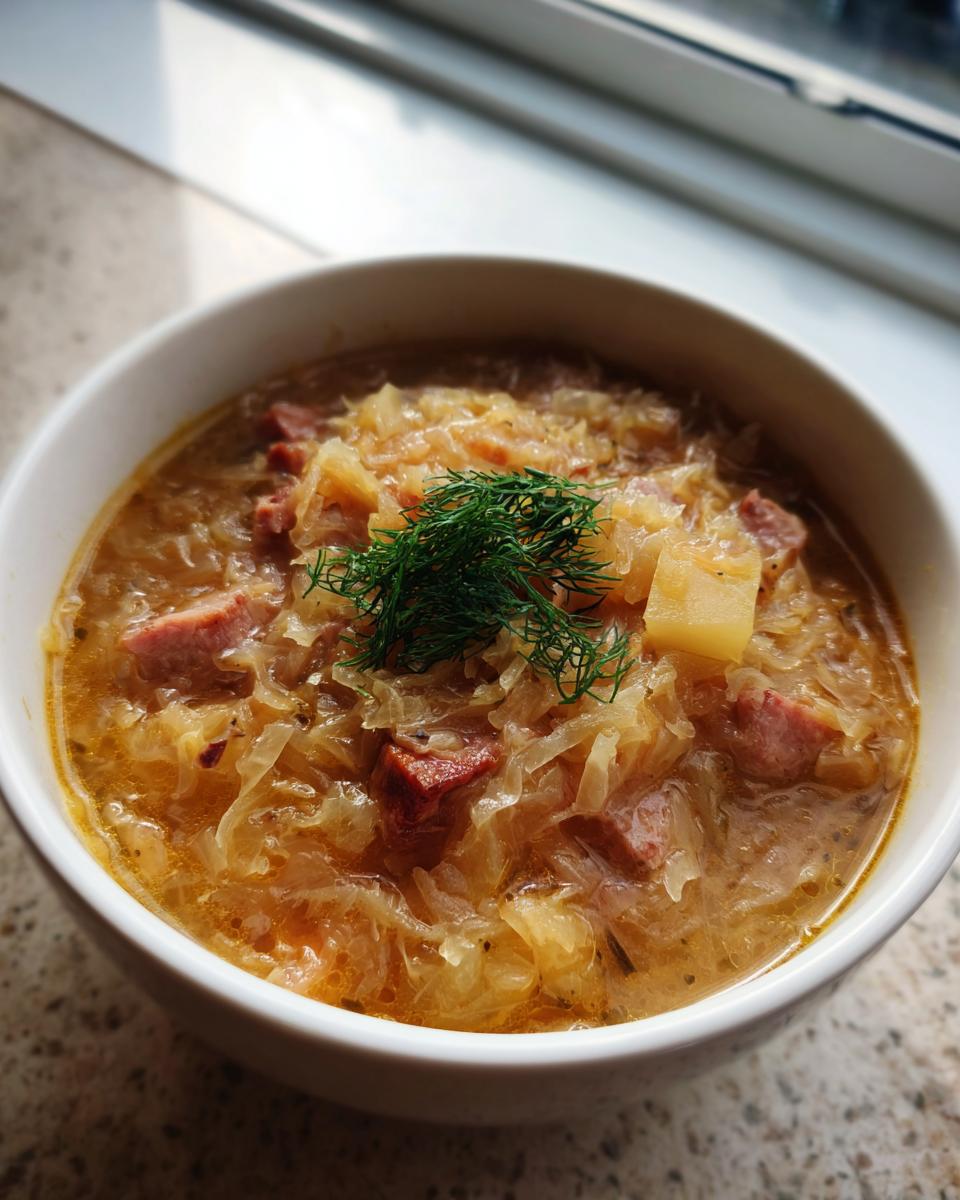
Achieving the Perfect Tangy Vegetable Soup Balance
Now listen, I know some of you might shy away from sauerkraut because you think it’s going to be overwhelmingly sour. That’s where technique matters! With this recipe, you control the volume. If you want a milder flavor, give that cabbage a good rinse; it mellows the acidity beautifully. But if you love that traditional punch? Use it straight from the jar! That control is what makes this such a versatile and delicious Tangy Vegetable Soup.
Gathering Ingredients for Your Sauerkraut Soup
To create a soup this comforting and layered, we need to be precise with our ingredients, but don’t let the list overwhelm you! This is straightforward, beautiful cooking. Remember, every ingredient plays a specific role in achieving that perfect savory-meets-tangy result in your final hearty meal.
Here is what you’ll need—I’ve stuck closely to the traditional measurements that yielded the best flavor profile:
- 1 tablespoon olive oil
- 1 pound pork shoulder, cut into 1-inch cubes
- 1 large yellow onion, chopped
- 2 cloves garlic, minced
- 6 cups chicken broth
- 1 pound sauerkraut, drained and rinsed lightly (or use unrinsed for more tang)
- 2 medium potatoes, peeled and diced
- 1 bay leaf
- 1 teaspoon dried marjoram
- 1/2 teaspoon caraway seeds (optional, but I highly recommend them!)
- Salt and black pepper to taste
- 1/2 cup heavy cream (optional, only if you want a truly rich finish)
- Fresh dill, chopped, for that lovely garnish
Ingredient Notes and Substitutions for Sauerkraut Soup
This is where you can tailor this classic recipe just a touch for your family, especially if you’ve made it before. As I mentioned earlier, the sauerkraut is critical! If you want that bright, classic sour note, skip the rinse entirely—that’s the true flavor of Eastern Europe. However, if you’re new to the flavor, a light rinse settles the soup down nicely.
Also, everyone loves a good variation! While I used shoulder for the deep, slow-cooked pork flavor, a lot of folks absolutely love making a Kielbasa and Sauerkraut Soup. It’s simple: brown about a pound of good quality smoked kielbasa slices before you start browning your pork, or skip the pork entirely and just use the sausage. It brings a fantastic smokiness to the broth instantly!
How to Prepare This Hearty Sauerkraut Soup Recipe Step-by-Step
This Kapusniak comes together mostly hands-off, but those first few steps are where you build almost all of the deep, savory character. If you’ve ever made my Zuppa Toscana, you know that browning your meat first is non-negotiable if you want restaurant-quality flavor!
Browning Meat and Building the Flavor Base
First things first, heat up your olive oil in your biggest Dutch oven or pot over medium-high. Season your pork cubes well—don’t be shy with the salt and pepper! Brown them completely on all sides. You need that deep mahogany crust to form—that’s the flavor foundation, my friends. Once browned, scoop the pork out and let it rest. Now, turn the heat down a touch, toss in your chopped onion, and let those soften up nicely. When they start to turn translucent, add your minced garlic for just sixty seconds until you can really smell that lovely aroma.
Simmering Your One Pot Sauerkraut Meal
Time to bring everything together for our signature One Pot Sauerkraut Meal! Return that gorgeous pork to the pot. Pour in all six cups of that chicken broth and make sure you scrape up any browned bits stuck on the bottom—that’s gold! Now everything else goes in: the sauerkraut, the diced potatoes, the marjoram, the bay leaf, and those optional caraway seeds. Bring it all up to a boil, then immediately drop the heat way down, pop the lid on, and let it simmer gently for a full 60 to 75 minutes. You are waiting until that pork is fork-tender. Once done, remember to pull that bay leaf out!
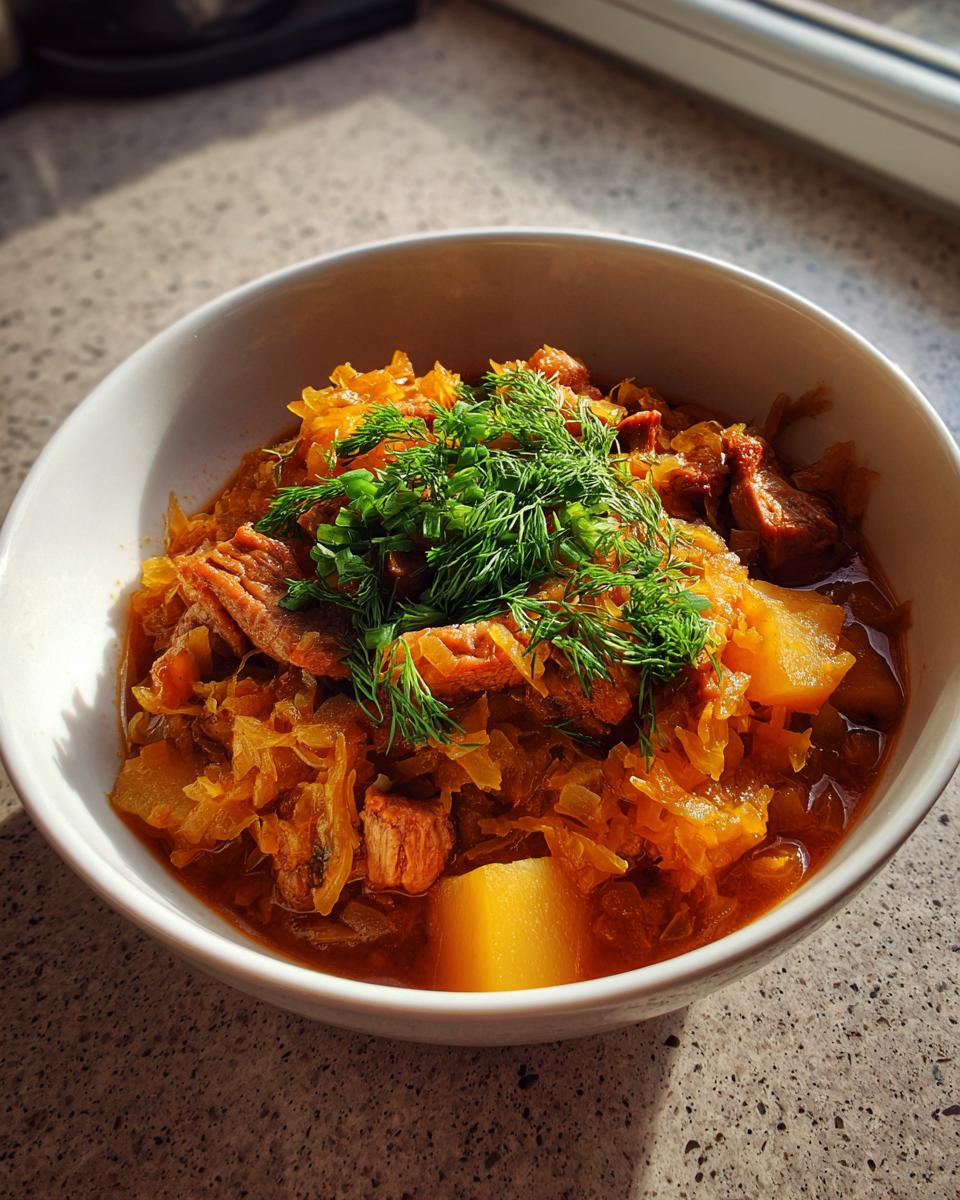
Finishing Touches for the Sauerkraut Soup
Once the simmering is done, give the soup a thorough taste test and adjust your salt and pepper. This is essential! If you decided to make your soup richer, now is the moment for the heavy cream. Pour it in slowly and stir gently so it incorporates beautifully. A crucial warning: do NOT boil the soup after the cream goes in, or it might look a little… unhappy. Finally, ladle your piping hot, perfectly seasoned **sauerkraut soup** into bowls and top it generously with fresh, bright green dill. It just makes the whole bowl sing!
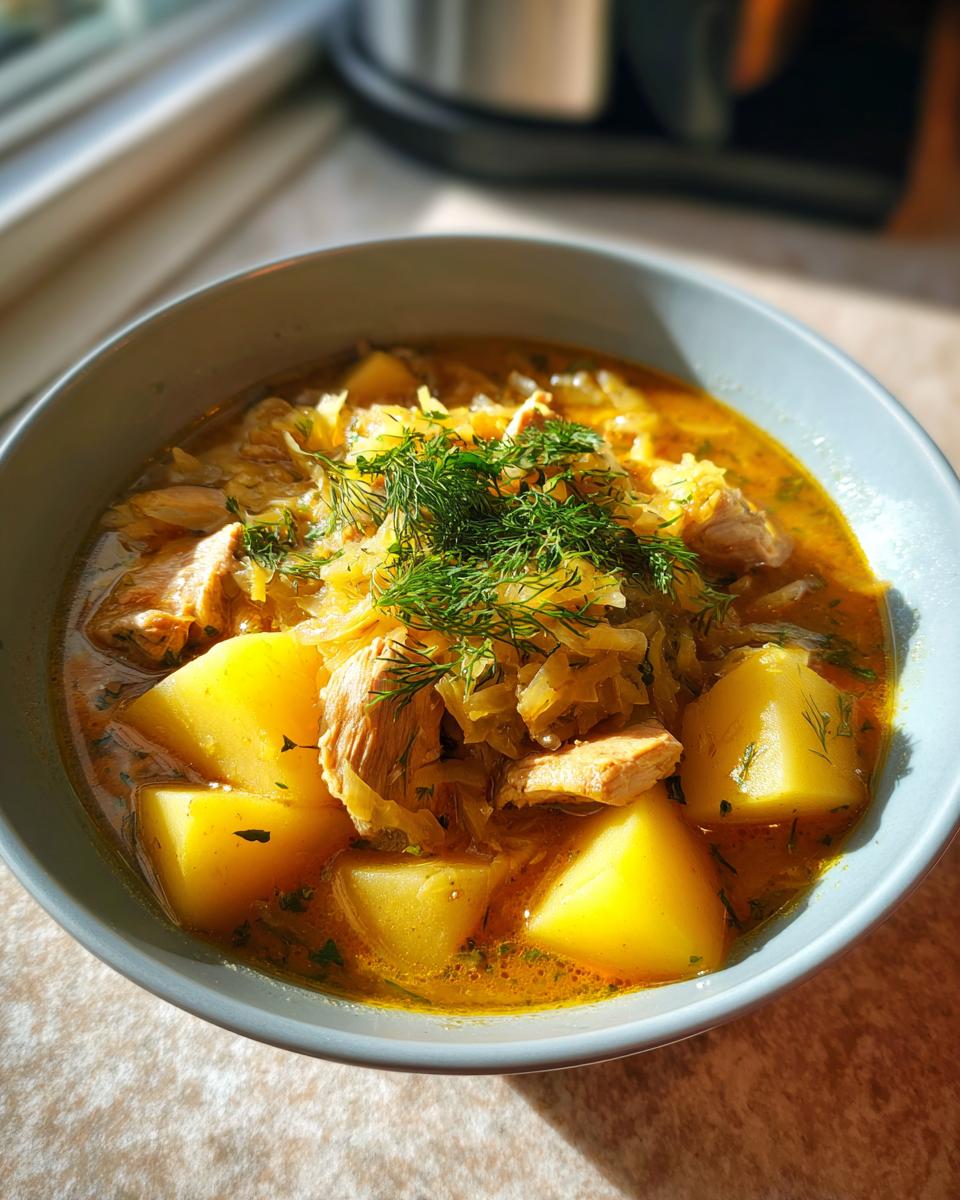
Tips for Success Making Authentic Eastern European Soup
Making a soup this traditional relies on understanding how the core ingredients interact, which is what separates a good soup from a truly memorable one. Since this Kapusniak is so flavor-forward, managing that sauerkraut tang is your main ticket to success. For instance, I remember the first time I made this for my father—I didn’t rinse the kraut at all, thinking I was being authentic. It was delicious, but my dad politely noted it had the sourness of a full-on pickle jar! Lesson learned: always taste your raw sauerkraut first.
When using pork shoulder, remember that time is your best friend. Don’t rush that simmer! If you cut the meat too small or rush the 75-minute mark, the pork will be tough, and the broth won’t have that deep, savory base we’re aiming for. A 1-inch cube size lets the meat break down slowly, releasing its gelatin and tenderizing itself right in the pot. That slow breakdown is crucial for a perfect, savory finish.
Also, don’t forget those tiny flavor boosters! Caraway seeds, while optional, provide that tiny, aromatic whisper that truly signals Eastern European influence in your soup. If you find you’ve accidentally browned your pork a little too aggressively, don’t panic! A splash of vinegar or even a touch more broth early on can rescue a slightly over-caramelized dish. It’s all about tasting and adjusting as you go. For more great comfort recipes, check out my Chicken Gnocchi Soup—it involves a similar principle of layering intense flavor starting with browning!
Serving Suggestions for Your Savory Sauerkraut Dinner
We’ve cooked this beautifully rich, tangy, and savory sauerkraut dinner; now it’s time to present it! Because this Polish Kapusniak is so hearty and satisfying on its own—packed with pork and potatoes—you don’t need a complicated side dish. In fact, I almost always prefer something simple to scoop up every last drop of that wonderful broth.
My first suggestion, and truly my favorite pairing, is crusty bread. Nothing beats tearing off a piece of freshly baked, crusty sourdough or a simple, rustic roll and dipping it deep into that savory broth. If you want to elevate that bread experience just a little, try making a simple oven-baked garlic toast—it adds another layer of welcoming flavor without stealing the spotlight from the soup. You can find my foolproof recipe for easy oven-baked garlic bread if you’re feeling ambitious!
Now, if you’re hosting and want to fulfill that promise of effortless entertaining, we must talk about wine. Since this soup has such a wonderful, bright tang from the sauerkraut, you need something crisp to cut through the richness of the pork and the broth. I find that a dry Riesling is absolutely magical here. Its slight fruitiness complements the earthy vegetables and acts as a wonderful counterpoint to the sourness. It’s an unexpected pairing sometimes, but trust me, it elevates this entire savory meal brilliantly.
For a simpler side, a small green salad dressed very lightly with a sharp vinaigrette works well to offer freshness alongside the heavy, slow-cooked flavors of the Kapusniak. But honestly, give me a big bowl of this soup and a slice of great bread, and I’m the happiest cook in the kitchen!
Storage and Reheating Instructions for Sauerkraut Soup
One of the many joys of making a hearty dish like this Polish Kapusniak is knowing you’ve got delicious leftovers waiting for you! Seriously, this kind of long-simmered **sauerkraut soup** often tastes even better the next day once those marjoram and caraway notes have fully mingled overnight. It’s such a fantastic way to plan ahead for an easy meal later in the week, which aligns perfectly with my goal of making beautiful cooking accessible.
When you’re ready to stash those leftovers, make sure they have been cooled down slightly, but don’t leave them sitting out for too long—food safety first! Scoop the soup into airtight containers. I usually divide mine up into single-serving sizes so they thaw quickly when I need them. You can safely keep this flavorful soup refrigerated for about three to four days. The pork and potatoes will absorb a little more liquid as they sit, which is perfectly normal.
Now, for reheating: I find the best way to revitalize this soup is slowly on the stovetop. Transfer the amount you want to a saucepan over medium-low heat. Sometimes, if it seems a bit thick after refrigeration, I’ll add a tiny splash of water or broth just to bring back that perfect soup consistency we achieved initially. Stir it occasionally until it’s steaming hot throughout. Make sure it gets nice and bubbly before you serve it up with that fresh dill garnish!
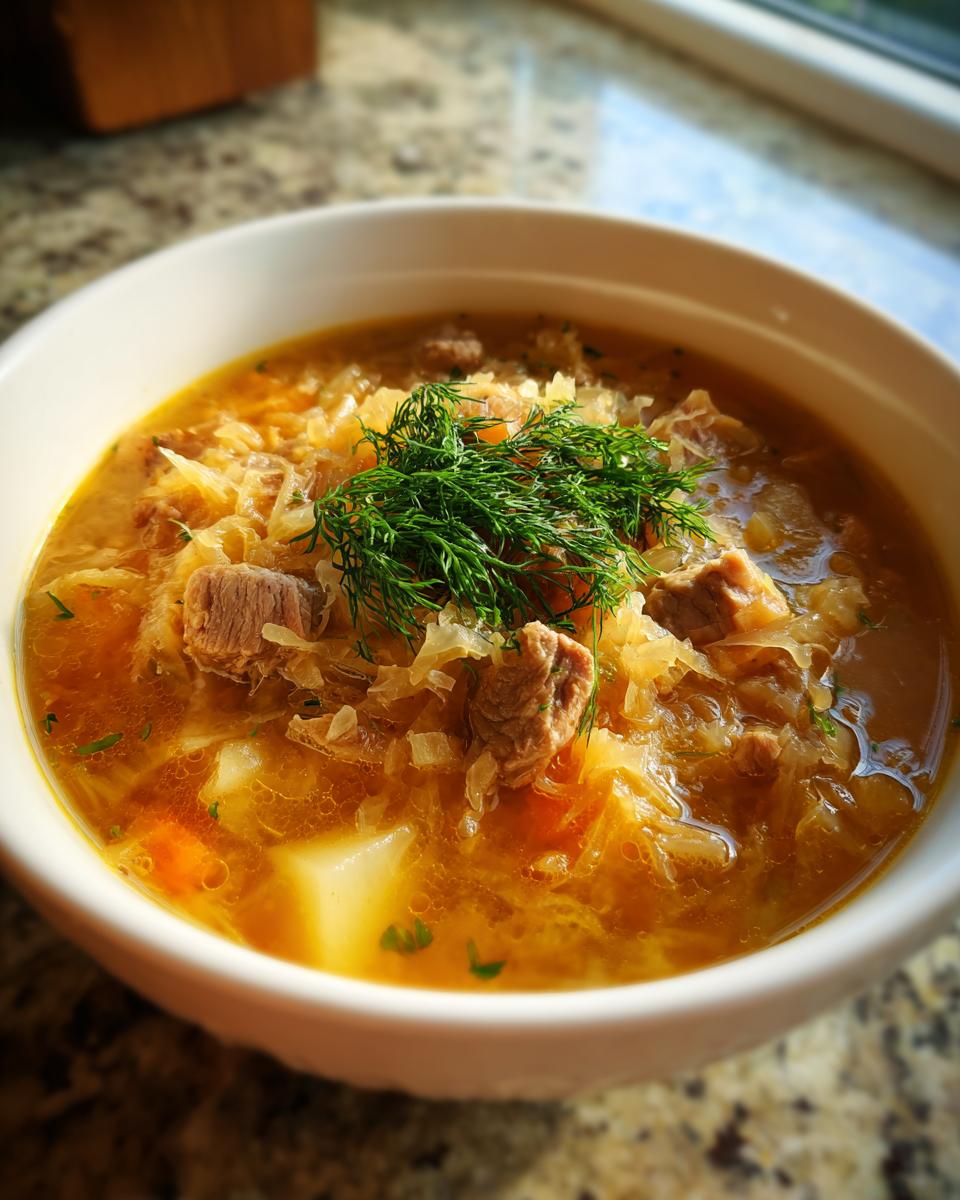
If you happen to have a huge batch and want to freeze some, it freezes beautifully too! Just be mindful of the potatoes; while they generally hold up well, they can sometimes get slightly softer upon thawing compared to fresh. I often freeze Kapusniak for up to three months. Thaw it overnight in the fridge, and then reheat it gently on the stove as described above. You end up with a homemade, savory meal ready in minutes, completely avoiding any stress!
Frequently Asked Questions About Sauerkraut Soup
It is so wonderful that you are diving into making this traditional dish! I find that often the best, most delicious recipes spark a few questions right at the end, usually about swapping ingredients or achieving the perfect texture. I want to make sure you feel confident walking away from this page, so here are answers to some common queries about making this robust Kapusniak.
Can I make a vegetarian sauerkraut soup?
That is a fabulous question! Absolutely, you can pivot this recipe toward a vegetarian style, though it will change the deep, meaty base of the Kapusniak. If you want to create a truly satisfying vegetarian option, I suggest completely omitting the pork shoulder and swapping the chicken broth for a high-quality vegetable broth. To replace the heartiness, sautéing a cup or two of chopped hearty mushrooms—like cremini or shiitake—along with your onions will give you a wonderful earthy flavor and texture. Beans, like kidney beans or cannellini beans, also bulk this up nicely and make it a very filling Hearty Sauerkraut Soup Recipe.
What is the difference between Kapusniak and other sauerkraut soups?
That’s where regional cooking shines! Kapusniak is specifically the Polish version. Its defining features are usually the inclusion of pork (or sometimes ribs) and potatoes, simmered long enough to make that pork incredibly tender. If you look at Ukrainian versions, for example, they often have a slightly different spice profile and sometimes use barley or mushrooms as the main filler instead of just potatoes, making them a bit closer to a hearty stew. German sauerkraut soups, on the other hand, often rely more heavily on smoked sausage like kielbasa for the base flavor, which is why I gave you that substitution above! They are all delicious comfort food, but Kapusniak definitely has its distinct, porky charm.
How can I make this a Creamy Sauerkraut Soup Recipe?
While the traditional Kapusniak leans toward a clear broth, I completely understand wanting that velvety texture that makes a soup feel extra luxurious on a cold night—I provide that option in the instructions! The simplest way is at the very end: stir in that 1/2 cup of heavy cream during the last five minutes of cooking. Remember the warning: just heat it through gently; do not allow it to boil after the cream is added. If you are avoiding dairy entirely but still want thickness, you can easily make a simple roux. Whisk two tablespoons of flour into two tablespoons of neutral oil until it forms a smooth paste, let it cook for a minute, and then slowly whisk that slurry into your simmering soup broth. It thickens beautifully and works perfectly for a Creamy Sauerkraut Soup Recipe!
If you’ve tried this recipe or have another variation you love, please pop over to the blog and let me know what you thought! Happy cooking!
Estimated Nutritional Data for Sauerkraut Soup
As a recipe developer, I always strive to give you guys a full, honest picture of what you’re enjoying when you cook my dishes. This Kapusniak is certainly hearty, packed with quality protein from the pork and delicious fiber from those vegetables, which is why it’s such a wonderfully satisfying dinner. While I meticulously test for flavor, these nutritional values are, of course, estimates based on the specific ingredients and brands I used right here in my kitchen.
Please understand these are guides, not strict dietary advice, especially since factors like how much salt you personally add or the exact cut of pork shoulder can change the final numbers! But it gives you a great idea of what’s in that incredible bowl of **sauerkraut soup**.
- Serving Size: 1.5 cups
- Calories: 350
- Fat: 18g
- Carbohydrates: 20g
- Protein: 28g
- Fiber: 4g
- Sugar: 5g
As you can see, that slow simmer with the pork creates a fantastic, flavor-rich meal that keeps you full and satisfied, proving that comfort food can absolutely be packed with great nutrition too! Enjoy every spoonful!
Share Your Comfort Food Creations
There is truly nothing better for me than hearing from you when you’ve cooked one of my recipes! I hope this hearty Polish Kapusniak warmed your kitchen and filled your home with the most incredible savory aroma. After all that work simmering that delicious **sauerkraut soup**, I’d be so honored if you would take a quick moment to rate this recipe with a full five stars right below this section.
And please, don’t be shy! Jump down to the comments and tell me all about it. Did you stick strictly to the pork shoulder, or did you decide to try out the smoked kielbasa variation? More importantly, what did you serve alongside your bowl? Did you go for that crusty bread, or maybe a simple side salad? Sharing those little details is how we all learn and build our own culinary stories together here at Unfold Recipes.
I truly value your feedback, and if you have any questions about technique or substitutions, feel free to ask. You can always reach out to me directly via my contact page as well. Thank you so much for taking the time to unfold this wonderful, comforting recipe with me. I look forward to seeing your beautiful creations!
PrintHearty Polish Kapusniak (Sauerkraut Soup) with Pork

This recipe presents an authentic Polish Kapusniak, a comforting and hearty sauerkraut soup featuring tender pork and potatoes. It balances the tang of sauerkraut with savory depth, making it a perfect, satisfying meal for cold weather.
- Prep Time: 20 min
- Cook Time: 90 min
- Total Time: 110 min
- Yield: 6 servings 1x
- Category: Dinner
- Method: Stovetop Simmering
- Cuisine: Polish
- Diet: Low Lactose
Ingredients
- 1 tablespoon olive oil
- 1 pound pork shoulder, cut into 1-inch cubes
- 1 large yellow onion, chopped
- 2 cloves garlic, minced
- 6 cups chicken broth
- 1 pound sauerkraut, drained and rinsed lightly (or use unrinsed for more tang)
- 2 medium potatoes, peeled and diced
- 1 bay leaf
- 1 teaspoon dried marjoram
- 1/2 teaspoon caraway seeds (optional)
- Salt and black pepper to taste
- 1/2 cup heavy cream (optional, for a richer soup)
- Fresh dill, chopped, for garnish
Instructions
- Heat the olive oil in a large pot or Dutch oven over medium-high heat. Season the pork cubes with salt and pepper. Brown the pork on all sides, working in batches if necessary. Remove the pork and set it aside.
- Reduce the heat to medium. Add the chopped onion to the pot and cook until softened, about 5 minutes. Add the minced garlic and cook for 1 minute until fragrant.
- Return the pork to the pot. Pour in the chicken broth, scraping up any browned bits from the bottom of the pot.
- Add the drained sauerkraut, diced potatoes, bay leaf, marjoram, and caraway seeds (if using). Bring the mixture to a boil, then reduce the heat to low, cover, and simmer for 60 to 75 minutes, or until the pork is very tender.
- Remove the bay leaf. Taste the soup and adjust seasoning with salt and pepper. If you desire a creamier texture, stir in the heavy cream during the last 5 minutes of cooking. Do not boil after adding cream.
- Ladle the hearty sauerkraut soup into bowls. Garnish generously with fresh chopped dill before serving.
Notes
- For a more traditional flavor, skip rinsing the sauerkraut to keep its full sour profile. If you prefer less tang, rinse it well under cold water.
- You can substitute the pork shoulder with smoked kielbasa sausage for a different, but equally delicious, savory sauerkraut soup flavor. Brown the sausage slices before adding them back in with the broth.
- This soup pairs well with a glass of dry Riesling to complement the tanginess.
Nutrition
- Serving Size: 1.5 cups
- Calories: 350
- Sugar: 5
- Sodium: 650
- Fat: 18
- Saturated Fat: 6
- Unsaturated Fat: 12
- Trans Fat: 0
- Carbohydrates: 20
- Fiber: 4
- Protein: 28
- Cholesterol: 75