


If there’s one dessert that instantly transports me to a place of pure tropical indulgence, it has to be glorious, sweet mango sticky rice. That perfect combination of warm, tender rice, sweet golden mango, and luscious coconut cream just sings! Now, I know what you’re thinking—authentic techniques can seem complicated, but that’s where my testing comes in. I’ve spent ages refining this Khao Neeo Mamuang recipe so you get that rich, authentic flavor without the fuss. For me, this sweet Thai comfort food reminds me of the vibrant, shared meals I love telling stories about. We’ve nailed the creamy sauce and the rice texture here, trust me!
- Why This Is the Best Mango Sticky Rice Recipe You Will Make
- Essential Ingredients for Authentic Mango Sticky Rice
- Khao Neeo Mamuang Tutorial: Step-by-Step Instructions
- Serving Tips for the Best Mango Sticky Rice
- Storage and Reheating Instructions for Your Thai Dessert Recipe
- Frequently Asked Questions About Mango Sticky Rice
- Estimated Nutritional Data for Mango Sticky Rice
- Share Your Sweet Thai Comfort Food Creations
Why This Is the Best Mango Sticky Rice Recipe You Will Make
I promise you, once you try this version, you won’t look anywhere else. We’re bypassing the fussy steps that make other recipes feel like homework and focusing purely on flavor impact. This recipe delivers that famous, decadent texture that makes it the ultimate indulgent summer treat alongside the incredible flavor profile you expect from the best mango sticky rice stalls in Bangkok.
Here’s exactly what makes this Thai dessert recipe a keeper:
- The Coconut Sauce is Beyond Creamy: We use a special two-part sauce method. The first soaks *into* the rice, and the second is a thicker drizzle that blankets the top. Pure heaven!
- Totally Authentic Flavor: We stick to the basics—real salt, real sugar, real coconut milk—to achieve that perfect balance against the fresh fruit.
- It’s Surprisingly Approachable: While it tastes like professional street food, the process skips confusing measurements and focuses on simple cooking principles.
Achieving the Perfect Coconut Sticky Rice Dessert Texture
This is where we win, honestly. The rice needs to be tender, plump, and completely saturated with sweet coconut but *never* gluey or mushy. That lovely plumpness only comes from properly soaking the glutinous rice before steaming. When you finish soaking and cooking, you need to let the rice rest with the first sauce for a solid amount of time. That patience guarantees the final product is the ideal coconut sticky rice dessert texture.

Essential Ingredients for Authentic Mango Sticky Rice
When we talk about true Thai dessert recipe magic, it all comes down to what you put in the bowl. I don’t mess around with ingredients here; sourcing the right ones is non-negotiable if you want that authentic creamy flavor. We need high-quality fat and the correct kind of grain. I’ve listed everything out for you below, broken down into what goes into the rice, what makes the sweet sauce, and the finishing touches. Stick to this list, and I guarantee success!
- For the Rice Base: 1 cup sweet/glutinous rice (sticky rice) and 1 cup water (for the initial soak).
- For the Soaking Sauce: 1 cup full-fat coconut milk, 1/2 cup granulated sugar, and 1/2 teaspoon salt.
- For the Creamy Topping Sauce: 1 (13.5 oz) can full-fat coconut milk, 1/4 cup granulated sugar, 1/4 teaspoon salt, plus 1 tablespoon cornstarch mixed with 2 tablespoons water (that slurry is important!).
- For Serving: 2 ripe Ataulfo or Nam Dok Mai mangoes and 1 tablespoon toasted sesame seeds for garnish.
Ingredient Notes and Substitutions for Your Coconut Sticky Rice Recipe
Listen closely: you MUST use true glutinous rice, often labeled as sweet rice. Regular rice will dissolve into mush! It just won’t absorb the coconut liquid the right way. For the mangoes, Ataulfo tend to be my go-to because they’re silky smooth and wonderfully sweet, though any perfectly ripe variety will work wonders. If you skip the cornstarch in the topping sauce, you’ll get a thin glaze instead of the beautiful, thick creamy coconut sauce recipe we are aiming for, so don’t leave it out!

Khao Neeo Mamuang Tutorial: Step-by-Step Instructions
Okay, let’s get cooking! This is the fun part where we turn simple ingredients into that heavenly mango sticky rice you dream about. Because the initial soak takes so long, this recipe is perfect for weekend meal planning—you prep it the day before, and then the stovetop work flies by! We are sticking extremely closely to the steps here because timing matters with sticky rice. Don’t rush the soaking or the resting!
Preparing the Sticky Rice Base for Mango Sticky Rice
First things first: rinsing! You need to rinse your sweet rice until the water that drains off is nearly clear. This gets rid of excess starch so the final texture isn’t gummy. Then, this is crucial: soak it! One cup of water is all you need for the soak, and I strongly suggest doing this overnight, but at least four hours minimum. When you’re ready to cook, drain that soaking water completely—we need the rice to steam, not boil. I usually use a steamer basket set over boiling water for about 20 to 25 minutes until the grains are tender all the way through. If you use a rice cooker, just make sure the water barely covers the rice.
Creating the Creamy Coconut Sauce Recipe for Topping
We need two sauces, remember? For the first one, the one the hot rice soaks up, take one cup of coconut milk, half a cup of sugar, and half a teaspoon of salt. Warm this gently on the stove until the sugar dissolves—I mean slow heat, never let it boil! As soon as the sugar is gone, pour that warm sauce over your hot, cooked rice, stir it gently, cover it tight, and let it sit for at least 30 minutes. This is when the rice absorbs all that flavor!
For the second sauce—the thick one we drizzle on top—repeat the process with the remaining can of coconut milk, the last bit of sugar and salt. This time, when it’s warm, whisk in your cornstarch slurry (that cornstarch mixed with a little water). You just cook that for a minute or two until it thickens up nicely into a decadent, creamy glaze. Take it off the heat immediately!
Serving Tips for the Best Mango Sticky Rice
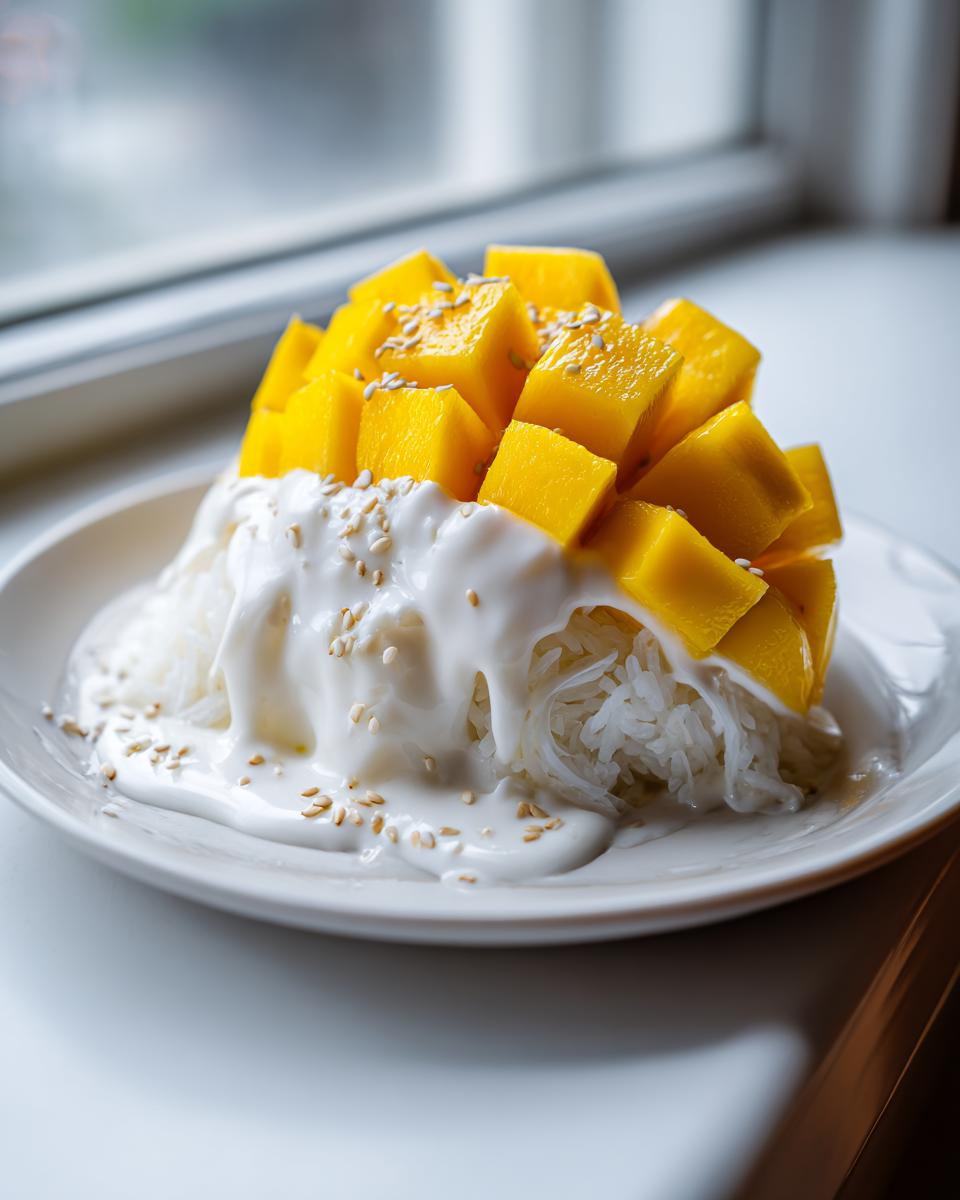
I love serving this warm! That slight warmth makes the sticky rice so soft and lets the coconut sauce just melt beautifully. Don’t wait too long, though; this easy tropical dessert is truly best enjoyed shortly after assembly. When slicing your ripe mangoes, keep the pieces neat—think thin, beautiful fans arranged right next to the mound of rice. Then, the grand finale: take that thick, creamy sauce you made and generously drizzle it over everything. If you’re entertaining guests, a little sprinkle of those toasted sesame seeds adds a lovely nutty crunch. Why not serve this with a lightly chilled, slightly off-dry Riesling? It cuts through that richness perfectly!
Storage and Reheating Instructions for Your Thai Dessert Recipe
Okay, if you’re like me, you might have leftovers because this is just too good to stop eating! The key to keeping this coconut sticky rice recipe delicious is separating everything before you put it away. Never store the mango slices with the rice; the moisture will make the mango gross quickly. Seriously, take the time to separate these components.
Store the sweet sticky rice in an airtight container, and keep the remaining coconut topping sauce in a separate, small jar in the fridge. You definitely want to use this up within two days—that real coconut milk doesn’t have a ton of preservatives, and we want it tasting fresh!
Now, reheating the rice can be tricky. You want it warm and soft, not hard like a brick. Don’t throw the rice in the microwave uncovered; it will dry out instantly! I suggest heating the rice gently in a microwave-safe bowl with just a tiny splash—maybe a teaspoon—of water or extra coconut milk. Cover it loosely with a damp paper towel and heat it in short bursts, checking frequently until it’s soft again. If the sauce has solidified, just warm that up separately on the stove until it’s runny and creamy again. Never put the fresh mango in the microwave, obviously!

Frequently Asked Questions About Mango Sticky Rice
It’s rare that making these incredible simple Asian sweets goes smoothly without a little question popping up along the way. I get so many messages about the rice texture and ingredient swaps, so I put together my top troubleshooting tips right here!
Can I make this a Decadent Vegan Dessert Alternative?
Absolutely, you can! This recipe is naturally vegetarian, but if you’re aiming for vegan, it’s super easy. The coconut milk is already plant-based, which is the biggest win for that rich creamy coconut sauce recipe! Just double-check your sugar to make sure it wasn’t processed with bone char if that’s a concern for you. Otherwise, this is a fantastic dairy-free tropical treat.
What if I don’t have time to soak the rice for the Coconut Sticky Rice Recipe?
I hear you, sometimes you need that quick homemade sticky rice fix! But please, please don’t skip the soak entirely. The rice won’t absorb enough liquid to cook properly and will end up hard and chalky. If you absolutely cannot do overnight, you must soak it for at least 3 hours in hot water, not cold. It won’t be quite as plump as the overnight version, but it will be miles better than skipping the step altogether!
How do I know when my mango is ripe enough for this tropical indulgence?
The secret to ripe mango dessert ideas is texture, not just color! The mango should yield slightly when you press it gently, kind of like a ripe avocado. It should smell fragrant near the stem end. If it’s rock hard, it will be sour and tough against the soft rice. We need that luxurious sweetness!
Estimated Nutritional Data for Mango Sticky Rice
I always hesitate slightly when posting nutrition facts because honestly, this is pure indulgence, right? It’s not an everyday salad! Keep in mind these figures are just estimates based on the ingredients and proportions I used in my testing—since brands vary, so can the totals. But just so you have a rough idea for your sweet Thai comfort food planning, here’s what one generous serving breaks down to:
- Calories: Around 450
- Sugar: Approximately 35 grams (Yes, it’s sweet!)
- Fat: About 20 grams (Hello, full-fat coconut milk!)
- Carbohydrates: Roughly 65 grams
Think of this as your special weekend treat, not your indulgent summer treat for dinner every Tuesday!
Share Your Sweet Thai Comfort Food Creations
Now that you’ve made this incredible bowl of mango sticky rice, I truly want to hear all about it! This dessert is meant to be shared, and seeing your successes makes all my recipe testing worthwhile. Did your rice come out perfectly plump? Was that coconut topping as rich and creamy as you hoped? Don’t be shy!
Please take a moment to leave a comment below and give this recipe a rating—five stars if it transported you straight to Thailand! Tell me about your mango choices, too! I love hearing how this sweet Thai comfort food fits into your kitchen traditions. Happy cooking, everyone!
PrintAuthentic & Easy Mango Sticky Rice: The Creamiest Coconut Sauce Recipe

Make truly authentic Thai Mango Sticky Rice (Khao Neeo Mamuang) at home. This recipe simplifies the steps for perfectly cooked sticky rice and a rich, creamy coconut sauce, paired with ripe mangoes.
- Prep Time: 15 min (plus soaking time)
- Cook Time: 30 min
- Total Time: 4 hours 45 min
- Yield: 4 servings 1x
- Category: Dessert
- Method: Steaming/Stovetop
- Cuisine: Thai
- Diet: Vegetarian
Ingredients
- 1 cup sweet/glutinous rice (sticky rice)
- 1 cup water (for soaking)
- 1 cup full-fat coconut milk (for soaking sauce)
- 1/2 cup granulated sugar
- 1/2 teaspoon salt
- 1 (13.5 oz) can full-fat coconut milk (for topping sauce)
- 1/4 cup granulated sugar (for topping sauce)
- 1/4 teaspoon salt (for topping sauce)
- 1 tablespoon cornstarch mixed with 2 tablespoons water (slurry)
- 2 ripe Ataulfo or Nam Dok Mai mangoes, peeled and sliced
- 1 tablespoon toasted sesame seeds (for garnish)
Instructions
- Rinse the sticky rice under cold water until the water runs clear.
- Soak the rinsed rice in 1 cup of water for at least 4 hours, or preferably overnight. Drain the soaked rice well.
- Steam the drained sticky rice for 20 to 25 minutes until tender and cooked through. Alternatively, cook in a rice cooker with just enough water to cover the rice by about 1/2 inch.
- While the rice steams, prepare the soaking sauce: In a small saucepan, combine 1 cup coconut milk, 1/2 cup sugar, and 1/2 teaspoon salt. Heat gently until the sugar and salt dissolve. Do not boil.
- Transfer the hot, cooked sticky rice to a bowl. Pour the warm soaking sauce over the rice. Stir gently to combine. Cover the bowl tightly with plastic wrap or a lid and let it sit for at least 30 minutes to allow the rice to absorb the liquid completely.
- Prepare the creamy topping sauce: In a separate small saucepan, combine the remaining 1 can of coconut milk, 1/4 cup sugar, and 1/4 teaspoon salt. Heat gently until the sugar dissolves.
- Whisk in the cornstarch slurry and cook for 1 to 2 minutes, stirring constantly, until the sauce thickens slightly to a creamy consistency. Remove from heat.
- To serve, place a portion of the sweet sticky rice on a plate. Arrange slices of fresh, ripe mango beside or on top of the rice.
- Drizzle the warm, creamy coconut topping sauce generously over the rice and mango.
- Garnish with toasted sesame seeds. Serve immediately.
Notes
- For the best texture, use true glutinous rice, often labeled as sweet rice. Do not substitute regular long-grain rice.
- If you are planning ahead, this recipe works well for meal planning; store leftover rice and sauce separately in the refrigerator for up to two days.
- If you skip the cornstarch slurry, the topping sauce will be thinner, similar to a glaze rather than a thick cream.
Nutrition
- Serving Size: 1 serving
- Calories: 450
- Sugar: 35
- Sodium: 250
- Fat: 20
- Saturated Fat: 18
- Unsaturated Fat: 2
- Trans Fat: 0
- Carbohydrates: 65
- Fiber: 2
- Protein: 5
- Cholesterol: 0