
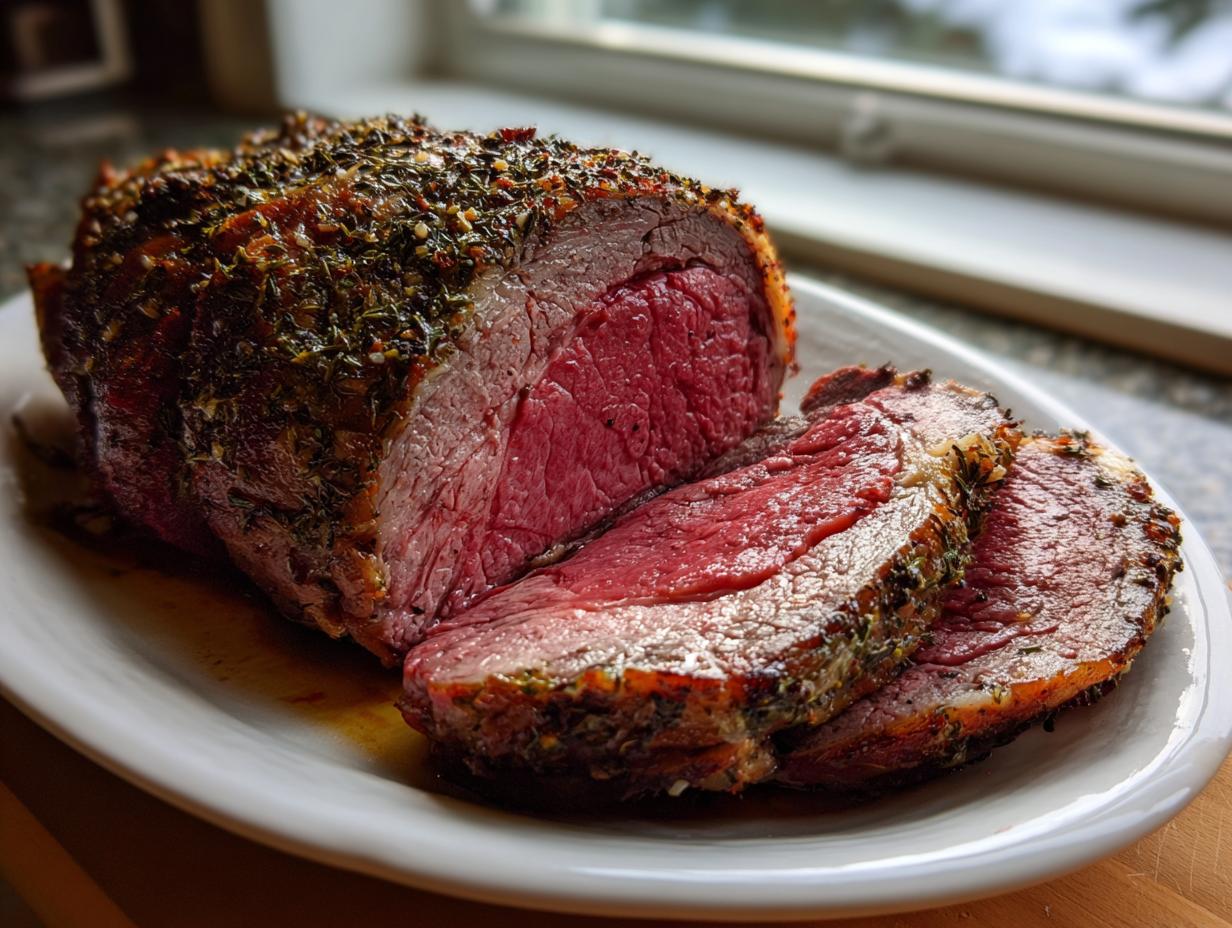

If you are hosting a holiday feast—and I mean *the* feast, the one everyone talks about for the rest of the year—you need a centerpiece that delivers pure drama without the panic. For my family gatherings, inspired by the rich traditions from my father’s Spanish side blended with that bright California ease, nothing quite compares to a perfectly cooked prime rib. I remember the first time I attempted this show-stopper; I was terrified of overcooking it! But I developed a very specific **prime rib roast oven** method that is utterly foolproof. Trust me when I say: you absolutely can achieve that gorgeous, savory, crusty exterior while keeping the inside perfectly pink, juicy, and tender every single time. Learning the techniques behind these impressive roasts is core to what we do here at Unfold Recipes! Let’s unfold this story together.
- Why This Is the Best Oven Roasted Prime Rib Recipe
- Ingredients for Your Foolproof prime rib roast oven
- Essential Equipment for Your prime rib roast oven
- Easy prime rib roast oven Instructions: The Standing Rib Roast Oven Method
- Tips for the Ultimate prime rib roast oven Success
- Serving Suggestions for Your prime rib roast oven
- Storage and Reheating Instructions for Leftover prime rib roast oven
- Frequently Asked Questions About Cooking Prime Rib in Oven
- Share Your Christmas Prime Rib Roast Experience
- Share Your Christmas Prime Rib Roast Experience
Why This Is the Best Oven Roasted Prime Rib Recipe
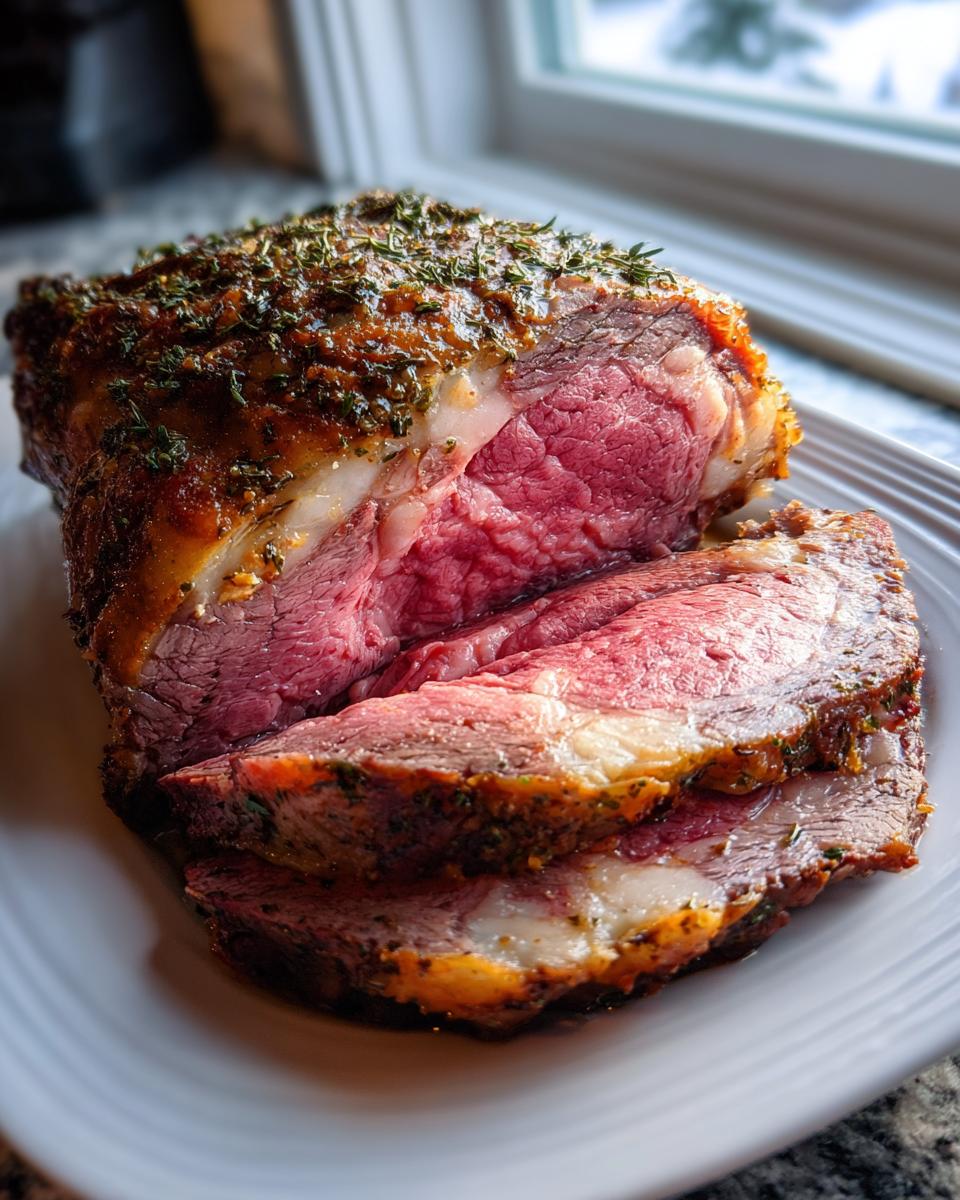
When you’re making something as special as a standing rib roast for Christmas, you don’t want guesswork; you want guarantees. That’s why I call this the Best Oven Roasted Prime Rib method. It mixes high-end results with dead-simple execution. We are locking in that signature buttery, garlic-herb flavor while ensuring the interior stays wonderfully Juicy Medium Rare Prime Rib.
It might seem intimidating, but this technique removes all the stress associated with a massive cut of beef. My culinary training helped me streamline this, so you aren’t babysitting the oven for hours.
Achieving the Perfect Crispy Crust on Your prime rib roast oven
The secret to that shatteringly crisp exterior is a quick blast of heat right when the roast goes in. We start the oven scorching hot at 500 degrees Fahrenheit—that initial shock creates a beautiful seal and sets that gorgeous crust we all crave.
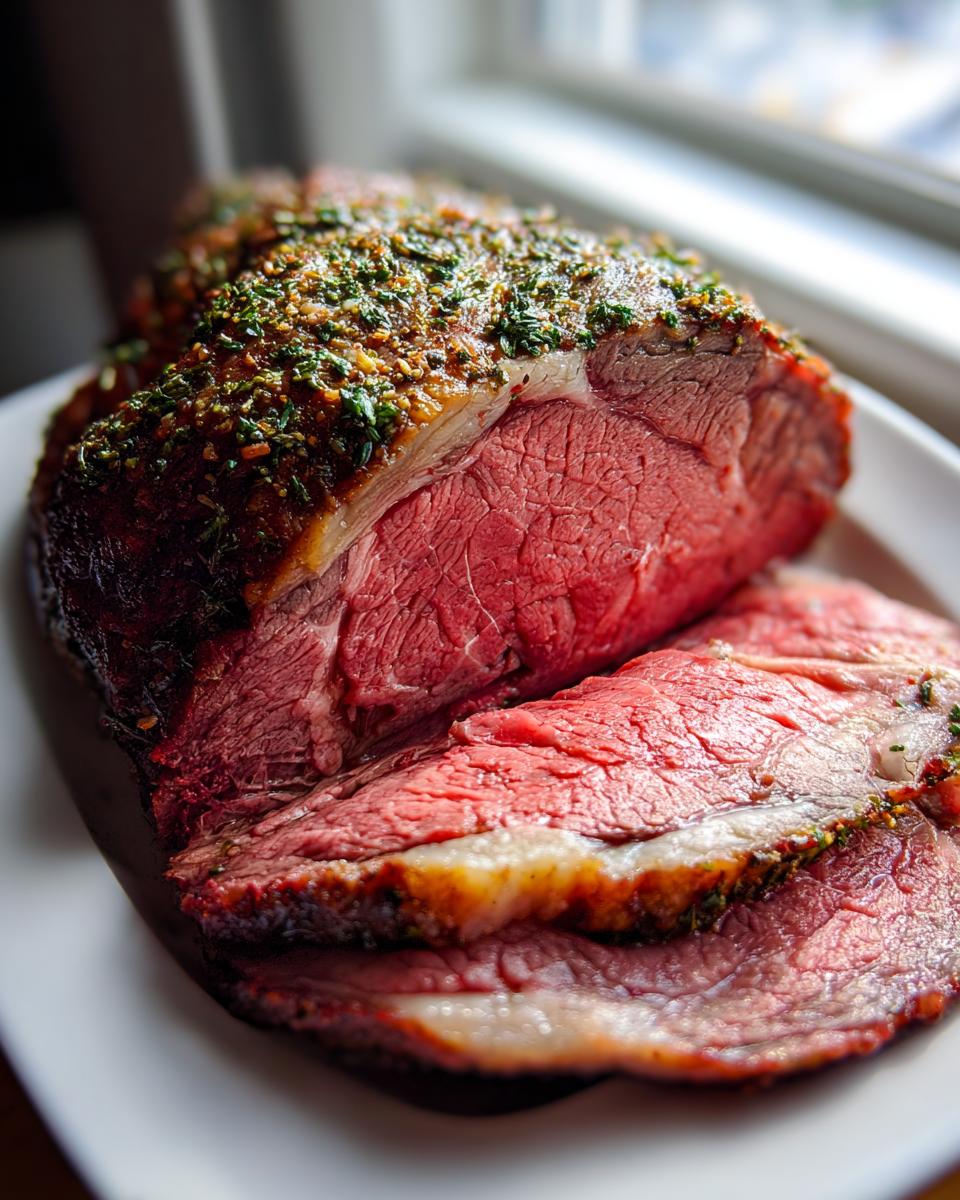
The mustard and oil mixture I use acts like a flavor glue for the herbs, but the actual crisping power comes from that first 15 minutes of intense heat. After that initial blast, we drop the temperature right down to a gentle roast. It’s a two-stage temperature approach that keeps the exterior magnificent without overcooking what’s inside.
If you want to see more main dishes that wow your guests without demanding all day in the kitchen, check out my Main Dishes collection for more inspiration!
Ingredients for Your Foolproof prime rib roast oven
When gathering supplies for this magnificent roast, quality matters, darling. For this particular recipe, we are leaning into that classic, aromatic Garlic Herb Prime Rib profile. Don’t skimp on the fresh garlic—it truly makes a difference! Remember, you want the best result possible for your big holiday meal, so using a reliable cut is key. You will need to specify whether you are getting a bone-in or boneless cut, which is technically called a standing rib roast oven cut. Here’s exactly what needs to be on your list!
- 1 (5-7 lb) bone-in or boneless prime rib roast (standing rib roast)
- 3 tablespoons kosher salt
- 2 tablespoons freshly ground black pepper
- 1 tablespoon dried rosemary
- 1 tablespoon dried thyme
- 6 cloves garlic, minced
- 1/4 cup olive oil
- 2 tablespoons Dijon mustard
- 1 teaspoon onion powder
- 1 teaspoon garlic powder
If you’re looking for inspiration on other recipes to test out this week before the big holiday, take a peek at the very latest updates right here on the Unfold Recipes Blog!
Essential Equipment for Your prime rib roast oven
When it comes to cooking something truly magnificent like this roast, having the right tools isn’t optional—it’s how we guarantee success! I always tell my readers that technique is everything, but the right equipment makes the technique ten times easier. For this prime rib roast oven method, there are three non-negotiables you must have ready before you even think about mixing that rub.
First, you absolutely need a sturdy roasting pan. It needs to be large enough to hold your cut without crowding it. Crucially, you need a V-rack to go inside that pan. The rack lifts the beef off the bottom, allowing the heat to circulate underneath and promoting that even cooking we are aiming for. No rack means the underside steams instead of roasting, and we definitely don’t want that!
Second, and this is where we talk about hitting that perfect internal color, you must use a reliable meat thermometer. Forget the dial-style ones that live in the oven; I mean a digital instant-read thermometer. Checking the temperature correctly is the core of our Prime Rib Temperature Guide. It’s the only way to know exactly when to pull that beef so it ends up perfectly medium-rare.
Bone-In vs Boneless Prime Rib Cooking Considerations
This is always a question I get! Should you go bone-in or boneless? My preference, and the one I stick to for holidays, is bone-in. The bones provide a little extra insulation, helping the meat closer to the bottom cook a bit more gently. As my notes mention, those bones act like a natural rack, which is fantastic for evenness.
However, if you are short on space in your roasting pan or perhaps you’re serving a smaller crowd, a boneless roast works just fine. If you choose boneless, you still need that V-rack so the air can circulate underneath. Understanding the Bone-In vs Boneless Prime Rib Cooking difference just gives you more confidence when you talk to your butcher!
Easy prime rib roast oven Instructions: The Standing Rib Roast Oven Method
Alright, let’s get down to business! Following these simple steps for the **prime rib roast oven** process means you won’t have to worry about ending up with a dry roast, I promise. The entire process hinges on two critical timing elements: bringing the roast up to room temperature first, and then respecting the resting time afterward. Don’t ever skip letting the meat rest!
Here is the streamlined sequence we use for this magnificent Standing Rib Roast Oven Method:
- First things first—take that gorgeous prime rib out of the fridge about three to four hours before you plan to start cooking. We need it to relax, folks; a cold roast cooks unevenly. Just let it sit out on the counter.
- Next, crank that oven up! Preheat your oven to a blazing 500 degrees Fahrenheit. Hot, hot, hot!
- While that’s heating, prepare your rub; we mixed the herbs, salt, and powders earlier. Then, pat the entire exterior of the roast completely dry with paper towels. Seriously, every single drop of moisture needs to go if we want that crust.
- Brush the roast all over with that Dijon mustard and olive oil mixture. It doesn’t need to be perfect, but make sure it’s coated.
- Now, slather that incredible herb rub all over—press it in there firmly so it sticks well.
- Set the roast fat-side up onto a V-rack inside your roasting pan.
- Time for the heat shock! Put the whole setup into that screaming hot 500°F oven and let it cook for precisely 15 minutes. That’s it—15 minutes only.
- After those 15 minutes, reduce the oven temperature down to 325 degrees Fahrenheit. Don’t open the door yet, just set the dial correctly.
- Now we roast low and slow. Keep your instant-read thermometer handy; we are using it frequently. We are aiming to pull the roast out when the thickest part registers between 125°F and 130°F. This usually takes about 13–15 minutes per pound, but your thermometer is the only voice you should listen to here!
- Once you hit that target pull temperature, take the roast immediately out of the oven. Do not leave it in there another second!
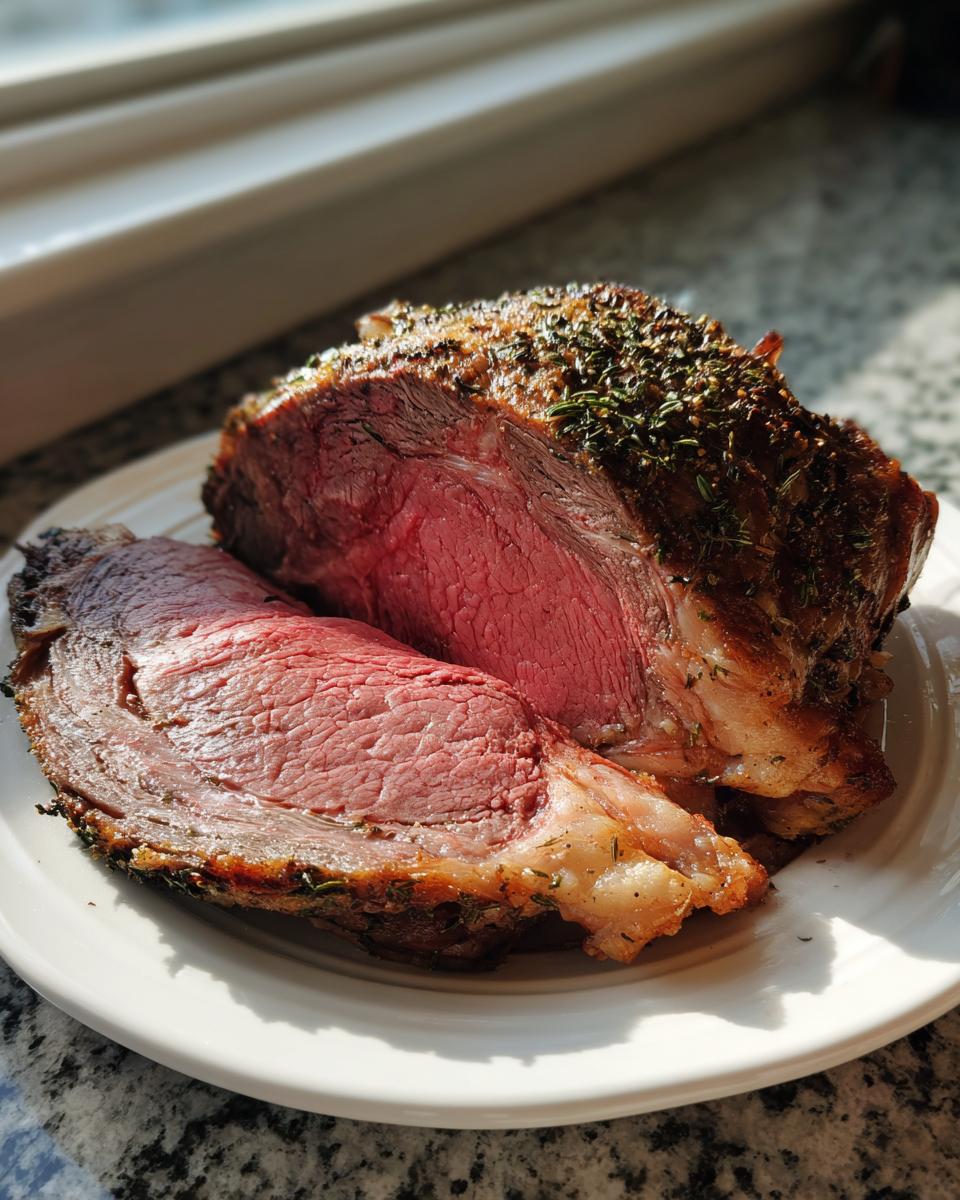
- Cover the meat loosely with foil—and I mean *loosely*, don’t let the foil touch the crust or it will steam! Let it rest on the counter for a minimum of 20 to 30 minutes. This resting period is non-negotiable; this is where the magic happens, and the temperature settles perfectly into the safe 130°F to 135°F range.
- Slice against the grain and enjoy the applause!
For more guidance on making sure your holiday meal timeline runs smoothly, you can always check out my tips for baking timing in general, though this roast is surprisingly forgiving if you stick to the temperature!
The Crucial Temperature Check for Juicy Medium Rare Prime Rib
This is honestly the make-or-break moment for your entire Juicy Medium Rare Prime Rib endeavor. If you take one thing away from this entire guide, let it be this: trust the thermometer, not the clock.
When I say pull it at 125°F to 130°F, I mean it! That’s because carryover cooking is real when you pull beautiful beef this large out of the heat. During that crucial 20–30 minute rest, the internal temperature will silently climb another 5 degrees. If you wait until 135°F in the oven, you’ll end up with medium-well when you slice it. That extra time allows the juices to redistribute throughout the meat fibers, ensuring that melt-in-your-mouth texture we are aiming for. For a truly perfect slice, aim for that 130°F removal point.
To see what other home cooks are achieving with similar oven techniques, you can check out this great resource on achieving medium rare results!
Tips for the Ultimate prime rib roast oven Success
Even with our foolproof instructions, a few finishing touches can turn this already spectacular roast into a true gastronomic triumph! Think of these extra steps as my personal way of ensuring you get that stunning **prime rib roast oven** result every single time you host. We are aiming for that restaurant-quality finish right in your home kitchen.
Remember how vital it was that we patted the roast dry? That step doesn’t just help the rub stick; it’s essential for developing that fantastic, darker crust. If you skip drying the surface, you’re essentially steaming the exterior, and that crust will be soft, not savory. Don’t let your hard work go to waste!
Another element I insist upon is using that V-rack. As we discussed in the equipment section, lifting the meat off the pan bottom is crucial. If you don’t have one, you can usually fashion legs out of thick, wadded-up balls of aluminum foil, but I highly recommend investing in a good one if you plan on making this Holiday Beef Centerpiece often. The even exposure to dry oven heat is what creates that uniformly browned outer layer.
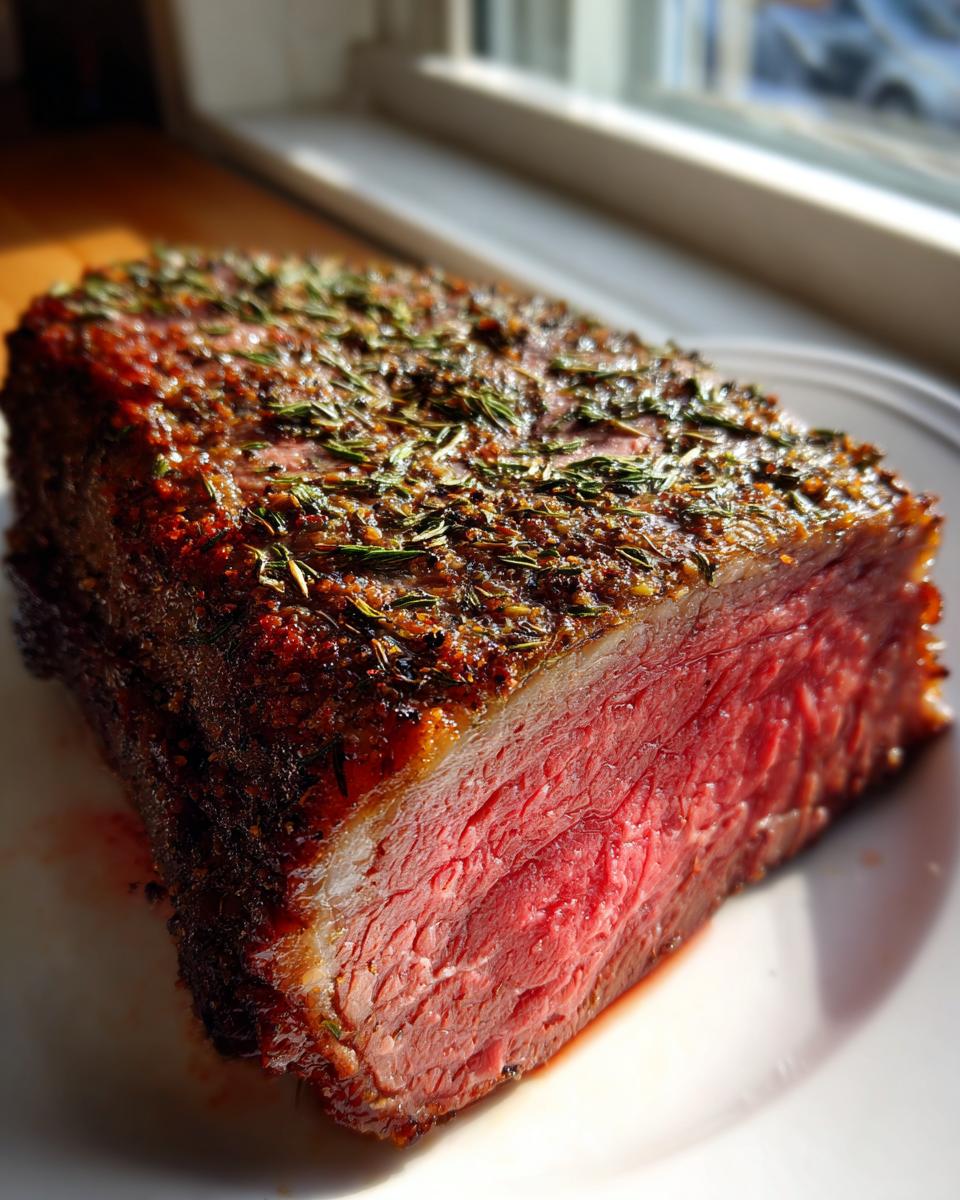
But perhaps the most important pro tip I can give you, and one I reiterate constantly, is the resting period. I know, you’re excited, dinner is ready, everyone is hungry, and you want to carve that beauty immediately. Resist! That 20 to 30 minutes spent tented loosely in foil is where the internal temperature stabilizes and the juices, which have been driven inward by the heat, redistribute back throughout the entire roast. If you slice too early, all those beautiful juices run out onto the cutting board, leaving you with drier meat. Trust me, the anticipation will be worth it.
For some wonderful insights on navigating the temperatures for that perfect medium-rare, I love checking out these tips shared by fellow home cooks over at Olivia’s Kitchen. And if you are planning other dishes this holiday season, my recipe for Garlic Herb Stuffed Mushrooms pairs wonderfully with beef flavors!
Serving Suggestions for Your prime rib roast oven
You’ve conquered the roast! Now it’s time to dress the table and make this entire meal worthy of your centerpiece. A gorgeous slice of prime rib deserves accompaniments that are equally thoughtful, right? Since this is such a rich, powerful flavor profile, we need sides that either cut through that richness or soak up all those incredible juices running out onto the cutting board.
First, let’s talk about the pan drippings. You absolutely cannot waste them! If you decide not to make a formal gravy, you can easily whip up a very simple Prime Rib Au Jus Recipe, which complements the meat beautifully without hiding its flavor. All you do is skim off as much of that rendered fat from the bottom of your roasting pan as you can.
Once the surface fat is removed, you’ll be left with intensely flavored beef juices. Transfer those drippings to a small saucepan. Add a cup or two of good quality beef broth—the store-bought kind is perfectly fine here because the flavor base is already built in. Just simmer that gently until it thickens just slightly. You want it thinner than a traditional gravy; that’s the magic of true au jus. It just pours over the meat!
And of course, horseradish sauce is a non-negotiable for me. My preferred method is to mix store-bought prepared horseradish with a little bit of crème fraîche or sour cream—this cools down the spice just enough for a perfect bite. Don’t overthink it; a simple, sharp contrast is needed to balance the richness of the beef fat.
If you need some inspiration for what to serve alongside this masterpiece—think creamy mashed potatoes that catch every drop of that au jus, or maybe some bright, simple green vegetables—head over to my Side Dishes category. We have plenty of ideas to round out your spectacular holiday plate!
Storage and Reheating Instructions for Leftover prime rib roast oven
Oh, the glorious dilemma: having leftovers of the best roast beef you’ve ever made! While I hope you managed to eat it all because, honestly, standing rib roast is always best the day it’s carved, we all know miracles happen, and sometimes you have a beautiful hunk remaining. Dealing with leftovers from a magnificent **prime rib roast oven** requires a little gentleness to maintain that tender texture we worked so hard to achieve.
First, storage is key. If you haven’t sliced it yet, great! Wrap the whole roast tightly in plastic wrap, then place it inside a sturdy zip-top bag or airtight container. It should keep well in the refrigerator for three to four days. If you *did* slice it right away—which is smart if you know you won’t eat the whole roast quickly—store those thin slices stacked neatly in an airtight container.
Now, for reheating; this is where people go wrong and end up with tough, dry beef. Please, my friends, absolutely avoid the microwave if you can! The microwave hates roasts and will instantly turn your tender slices into shoe leather. You want gentle heat to warm the meat through without cooking it further.
My favorite way to revive leftover prime rib is super simple. Take your slices and place them in a single layer in an oven-safe baking dish. Pour just enough of your saved au jus or good quality beef broth into the bottom of the dish to come about a quarter of the way up the side of the meat—don’t drown it! Cover the dish tightly with foil and place it into a very low oven, say 275°F (135°C), for about 10 to 15 minutes. The steam trapped by the foil and the gentle heat of the broth will warm the meat through perfectly, keeping it juicy and tender for your second meal!
Frequently Asked Questions About Cooking Prime Rib in Oven
It’s completely normal to have a few lingering questions before tackling a big roast like this! Preparing a **prime rib roast oven** masterpiece can feel high-stakes, especially around the holidays. I’ve compiled the most common queries I receive to help you feel 100% confident before you start that famous 500-degree blast. We want your meal to be a true **Show Stopping Beef Roast**!
If my roast is boneless, do I still need to rest it for 30 minutes?
Yes, absolutely! Resting is crucial, regardless of whether you used a bone-in or boneless cut. Thermodynamically, when meat is heated, the muscle fibers contract and squeeze all the moisture toward the center. If you cut right away, all that beautiful juice spills out onto your fancy platter. Letting it rest—even the boneless version—allows those fibers to relax and naturally redistribute those internal juices. Honestly, 30 minutes is the minimum I recommend, but if you are moving slowly on your side dishes, go ahead and let it rest for 40! For more on why resting is so vital, I always recommend checking out reliable resources like Jillee’s guide on foolproof recipes.
How critical is the 15-minute high-heat blast for my crispy crust?
It’s very critical for this specific recipe! That initial 15 minutes at 500°F is what sets the crust and begins to give the exterior the texture we want. If you jump straight into 325°F, you’ll get a less developed crust—it will still be flavorful, but it won’t have that signature, savory, crackly bite. Think of it as searing the outside immediately so that the inside can cook gently afterward. Don’t be scared of the thermometer readings during the lower phase; that high heat start is key!
Can I use the Make Ahead Prime Rib method with this oven technique?
That’s a great question regarding timing your holiday efforts! Honestly, the 500-degree initial blast we use here is designed for immediate cooking. If you are interested in the Make Ahead Prime Rib approach, which often involves cooking it at a very low temperature (like 200°F) to a lower pull temperature, you would generally skip this high-heat start. The make-ahead method works best when you cook it low and slow first, chill it completely, and then reheat it later with a quick sear. This recipe is optimized for serving the day you roast it, ensuring you get that perfect *Juicy Medium Rare Prime Rib* right out of the oven after resting.
What if my roast is much larger than 7 pounds? Should I just use the per-pound time?
That’s smart thinking for scaling up your Christmas Prime Rib Roast! While this recipe is built for convenience, the per-pound time is a better guideline than a fixed number when you have a larger cut. If you have a 10-pound roast, expect it to take longer than the estimate based on the 5-7 lb weight. Always use your thermometer as the true guide! Pull it when it hits 125°F–130°F, regardless of how the clock looks. Using a robust thermometer is the secret behind every truly successful roast—it’s how we ensure consistency every year.
If you have any more specific questions as you plan your feast, please don’t hesitate to reach out on my Contact page!
Share Your Christmas Prime Rib Roast Experience
Now that you have the secrets to creating an absolutely show-stopping **prime rib roast oven** centerpiece, I truly want to see what you create! There is nothing that brings me more joy than seeing you unfold a new family tradition in your own kitchen.
Please, if you love this recipe and your family raves about that perfectly pink, medium-rare interior and savory crust, leave a comment below! A star rating really helps other home cooks feel confident taking on this impressive cut for their own celebrations, especially when it comes to tackling a big **Christmas Prime Rib Roast**.
Don’t forget to tag me on social media with photos of your amazing efforts! If you enjoyed mastering this technique for your holiday meal, explore more beautiful, approachable recipes to complete your spread, like those found in my Desserts section. Happy cooking, and enjoy every delicious moment!
Warmly,
Catherine Valdès
Share Your Christmas Prime Rib Roast Experience
Now that you have the secrets to creating an absolutely show-stopping **prime rib roast oven** centerpiece, I truly want to see what you create! There is nothing that brings me more joy than seeing you unfold a new family tradition in your own kitchen.
Please, if you love this recipe and your family raves about that perfectly pink, medium-rare interior and savory crust, leave a comment below! A star rating really helps other home cooks feel confident taking on this impressive cut for their own celebrations, especially when it comes to tackling a big **Christmas Prime Rib Roast**.
Don’t forget to tag me on social media with photos of your amazing efforts! If you enjoyed mastering this technique for your holiday meal, explore more beautiful, approachable recipes to complete your spread, like those found in my Desserts section. Maybe try checking out some inspiration for amazing festive sides too, like this one for a fantastic classic Christmas prime rib if you want to see other takes on the holiday star!
I hope you savor the moment as much as the meal itself!
Warmly,
Catherine Valdès
The Foolproof Oven Prime Rib Roast for a Juicy, Medium-Rare Holiday Centerpiece

Create a show-stopping, perfectly medium-rare prime rib roast in your oven. This recipe delivers a tender interior and a savory, crispy herb crust, making it the best choice for your Christmas or holiday feast.
- Prep Time: 20 min
- Cook Time: 2 hr 30 min
- Total Time: 3 hr 20 min
- Yield: 6 servings 1x
- Category: Main Course
- Method: Oven Roasting
- Cuisine: American
- Diet: Low Fat
Ingredients
- 1 (5-7 lb) bone-in or boneless prime rib roast (standing rib roast)
- 3 tablespoons kosher salt
- 2 tablespoons freshly ground black pepper
- 1 tablespoon dried rosemary
- 1 tablespoon dried thyme
- 6 cloves garlic, minced
- 1/4 cup olive oil
- 2 tablespoons Dijon mustard
- 1 teaspoon onion powder
- 1 teaspoon garlic powder
Instructions
- Remove the prime rib roast from the refrigerator 3 to 4 hours before cooking. Let it sit at room temperature.
- Preheat your oven to 500 degrees Fahrenheit.
- Prepare the herb rub: In a small bowl, combine the kosher salt, pepper, dried rosemary, dried thyme, minced garlic, onion powder, and garlic powder. Mix well.
- Pat the entire roast dry with paper towels. This step helps create a crispy crust.
- In a separate small bowl, mix the olive oil and Dijon mustard. Brush this mixture evenly over the entire surface of the roast.
- Generously coat the roast with the herb rub mixture, pressing it firmly onto the meat.
- Place the roast, fat side up, in a roasting pan fitted with a V-rack. If using a bone-in roast, the bones act as a natural rack.
- Place the roast in the preheated 500°F oven and cook for exactly 15 minutes. This high heat starts the crust formation.
- Reduce the oven temperature to 325 degrees Fahrenheit without opening the door.
- Continue roasting. Use a reliable meat thermometer inserted into the thickest part of the roast, avoiding bone. For medium-rare, remove the roast when the internal temperature reaches 125°F to 130°F. (This usually takes about 13-15 minutes per pound at 325°F, but temperature is the only guide you trust.)
- Once the target temperature is reached, immediately remove the roast from the oven.
- Tent the roast loosely with aluminum foil and let it rest on the counter for at least 20 to 30 minutes before slicing. The internal temperature will rise to the perfect serving temperature of 130°F to 135°F during resting.
- Slice against the grain and serve immediately with pan drippings or horseradish sauce.
Notes
- For the best results, use a bone-in roast; the bones help insulate the meat and promote even cooking.
- If you prefer a crispier crust, you can sear the roast in a hot, oven-safe skillet on all sides before applying the rub and beginning the oven process.
- To make a simple au jus, pour the pan drippings into a saucepan, skim off excess fat, add beef broth, and simmer until slightly reduced.
Nutrition
- Serving Size: 6 oz cooked meat
- Calories: 450
- Sugar: 0
- Sodium: 450
- Fat: 30
- Saturated Fat: 12
- Unsaturated Fat: 18
- Trans Fat: 0
- Carbohydrates: 1
- Fiber: 0
- Protein: 42
- Cholesterol: 140